
Description
Target Audience: Homeschool moms + Preschool teachers + Daycare providers
Primary Keyword: “life cycle activities preschool” (2,400 searches/mês)
Secondary Keywords: “butterfly life cycle preschool”, “plant life cycle activities”, “frog life cycle for kids”, “teaching life cycles”
Meta Description (160 caracteres): “Life cycle activities for preschool ages 3-4. Butterflies, frogs, plants & more. Hands-on learning about growth & change. Free printables included!”
Your preschooler finds a caterpillar on the playground and is absolutely fascinated. They want to keep it, watch it, know everything about it. This is the perfect moment to introduce one of science’s most beautiful concepts: life cycles.
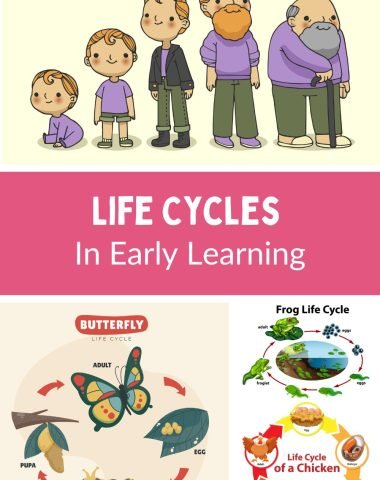
Life cycles teach children that all living things grow, change, and have patterns. A seed becomes a plant. A caterpillar becomes a butterfly. A baby becomes a child becomes an adult. These transformations are happening all around us—and preschoolers find them absolutely captivating.
Here’s why life cycles are perfect for preschool curriculum: they’re concrete, observable, and deeply engaging. Your 3-4 year old can SEE a seed sprout, watch a tadpole grow legs, or observe a chick hatch. These aren’t abstract concepts—they’re real-life magic.
Whether you’re a homeschool mom looking for hands-on science, a preschool teacher planning your spring curriculum, or a daycare provider wanting to connect children with nature, life cycle studies are essential.
What you’ll discover:
- Why life cycles matter for whole child development
- The best life cycles to teach at ages 3-4
- Hands-on activities for butterflies, frogs, plants, and more
- How to integrate life cycles throughout your entire year
- No-prep observation activities
- Books, songs, and crafts for each life cycle
- Free printable life cycle sequencing cards
Let’s explore the amazing world of growth and change!
Why Life Cycles Matter for Preschoolers (More Than Just Science)
Teaching life cycles goes far beyond science facts. It supports whole child development in powerful ways.
What children learn through life cycle studies:
Scientific Thinking – Observation, prediction, asking questions, noticing patterns. “What will happen next? How do you think it changed?”
Sequencing Skills – Understanding order and progression. First this happens, then this, then this. This builds mathematical thinking and early literacy skills.
Patience & Care – Watching a seed grow or a caterpillar transform takes TIME. Children learn to wait, observe daily, and care for living things.
Connection to Nature – In our screen-filled world, life cycles reconnect children to the natural world. They begin to see themselves as part of nature, not separate from it.
Understanding Change – Life cycles normalize change. Things transform, grow, and develop over time. This mirrors their own growth and helps them understand their changing bodies and abilities.
Emotional Development – Caring for a growing plant or creature builds empathy and responsibility. Watching something die (as living things do) introduces gentle conversations about life, death, and cycles.
Language Development – Rich vocabulary: egg, larva, pupa, adult; seed, sprout, stem, leaves, flower; tadpole, froglet, frog. Scientific language builds cognitive complexity.
Life cycle studies are whole child education—integrating science, math, literacy, social-emotional learning, and connection with the natural world.
The Best Life Cycles for Preschool (Ages 3-4)
Some life cycles are perfect for preschool—short enough to observe, dramatic enough to engage, and safe enough for little hands. Here are the top choices:
1. Butterfly Life Cycle (The Most Popular!)
Why it’s perfect:
- Dramatic transformation (caterpillar → butterfly is pure magic)
- Observable in 3-4 weeks
- Safe to handle (caterpillars are gentle)
- Available in kits or found in nature
- Kids are naturally fascinated
Stages:
- Egg (tiny, hard to see)
- Caterpillar/Larva (wiggly, eats constantly)
- Chrysalis/Pupa (hangs still, transforms inside)
- Butterfly (emerges, dries wings, flies away)
Best time: Spring/early summer (April-June)
How to observe:
- Order a butterfly kit (Painted Lady butterflies)
- Find caterpillars in your garden on milkweed (Monarchs) or parsley (Swallowtails)
- Create observation journals
2. Plant Life Cycle (Easiest to Do Year-Round!)
Why it’s perfect:
- Can do anytime, anywhere
- Fast results (beans sprout in days!)
- Connects to food and nutrition
- Requires minimal materials
- Teaches care and responsibility
Stages:
- Seed
- Sprout/Seedling (first leaves emerge)
- Mature Plant (grows stems, leaves)
- Flower/Fruit (reproduces)
- Seeds (cycle begins again)
Best plants for preschool:
- Beans (sprout in 3-5 days, dramatic growth)
- Sunflowers (big seeds, big plants, beautiful)
- Pumpkins (connect to fall themes)
- Herbs (basil, parsley—can eat!)
Best time: Any! But spring (March-May) is traditional planting season.
3. Frog Life Cycle (Absolutely Fascinating!)
Why it’s perfect:
- Incredible transformation (tail disappears, legs appear!)
- Relatively short (6-12 weeks depending on species)
- Connects to pond/water themes
- Dramatic observable changes
Stages:
- Egg (frog spawn—jelly-like clumps)
- Tadpole (all tail, no legs, lives underwater)
- Froglet (grows back legs, then front legs, tail shrinks)
- Adult Frog (no tail, hops on land)
Best time: Spring (March-May)
How to observe:
- Collect tadpoles from a pond (check local regulations!)
- Order tadpole kits
- Visit a pond weekly and observe (no collection needed)
Important: Requires aquatic setup and responsible release back to nature.
4. Chicken Life Cycle (Farm Theme Connection!)
Why it’s perfect:
- Eggs are familiar (kids eat them!)
- Hatching is DRAMATIC and exciting
- Connects to farm animals theme
- Builds empathy and care
Stages:
- Egg (fertilized)
- Embryo (developing inside egg for 21 days)
- Chick (hatches, fluffy, adorable)
- Adult Chicken (lays eggs, cycle continues)
Best time: Spring (though can be done anytime)
How to observe:
- Incubator and fertilized eggs (schools often do this as special event)
- Visit a farm during hatching season
- Watch videos of hatching process
Note: Requires significant commitment (temperature control, care after hatching).
5. Tree Life Cycle Through Seasons (Year-Long Study!)
Why it’s perfect:
- Happens right outside your window
- Teaches seasons AND life cycles
- Observable throughout the entire year
- No materials needed
Stages (for deciduous trees):
- Winter – Bare branches, dormant
- Spring – Buds, leaves emerge, flowers
- Summer – Full leaves, growing
- Fall – Leaves change color, fall
- Winter – Cycle begins again
Best time: Start in any season, observe for full year
How to observe:
- “Adopt a tree” outside your classroom/home
- Take photos monthly
- Create seasonal observation journals
Other Simple Life Cycles for Preschool
Apple Life Cycle – Seed → seedling → tree → flower → apple → seeds (connects to fall/nutrition themes)
Human Life Cycle – Baby → toddler → child → teenager → adult → elder (connects to “All About Me” and family themes)
Ladybug Life Cycle – Egg → larva → pupa → adult (similar to butterfly but smaller scale)
Integrating Life Cycles Throughout the Year (Monthly Themes)
Life cycles aren’t just a “spring science unit”—they can be woven throughout your entire preschool year, connecting to monthly themes and seasonal changes.
September/Back to School – Human Life Cycle Theme: All About Me, My Body, Growing Up
Study how babies grow into children. Bring baby photos, measure heights, talk about what they can do now that they couldn’t as babies.
Activities:
- Baby photo matching game
- “When I Was a Baby” book creation
- Growth chart—measure each child
- Discuss stages: baby, toddler, preschooler, big kid
October/Fall – Pumpkin & Apple Life Cycles Theme: Harvest, Fall, Pumpkins
Perfect connection to fall themes! Plant pumpkin seeds (won’t grow pumpkins in time, but teaches the concept). Visit apple orchard or pumpkin patch.
Activities:
- Plant pumpkin seeds in cups
- Cut open pumpkin, examine seeds
- Apple taste test, plant apple seeds
- Sequence cards: seed → vine → flower → pumpkin
November – Tree Life Cycle (Fall Stage) Theme: Trees, Leaves, Nature
Observe deciduous trees losing leaves. Discuss why trees go dormant in winter.
Activities:
- “Adopt a tree”—photograph it monthly
- Collect and sort leaves
- Discuss why leaves change color
- Create leaf rubbings
December/January – Evergreen Trees Theme: Winter, Trees
Study evergreen trees (don’t lose leaves). Compare to deciduous trees.
Activities:
- Nature walk to observe evergreens
- Compare pine needles to leaves
- Discuss adaptations (why evergreens keep needles)
February – Bird Life Cycle Theme: Birds, Winter Animals
Study bird eggs and nesting (preparation for spring).
Activities:
- Build bird feeders
- Read “Are You My Mother?”
- Discuss how birds care for eggs
- Create paper bird nests with eggs
March/Spring – Plant Life Cycle (Main Focus!) Theme: Spring, Growing, Plants
THE classic spring activity. Plant seeds and watch them grow daily!
Activities:
- Plant bean seeds in clear cups
- Observation journals (draw daily changes)
- Measure plant growth with rulers
- Discuss what plants need: water, sun, soil
April – Butterfly Life Cycle Theme: Spring, Bugs, Insects, Change
Order butterfly kit or find caterpillars. Watch transformation!
Activities:
- Butterfly kit observation (daily!)
- Read “The Very Hungry Caterpillar”
- Butterfly life cycle sequencing
- Release butterflies ceremony
May – Frog Life Cycle Theme: Pond Animals, Water
Collect tadpoles or observe at a pond. Watch legs emerge!
Activities:
- Tadpole observation tank
- Pond field trip
- Frog jumping games (gross motor!)
- Discuss amphibians vs. other animals
June/Summer – Flower Life Cycle Theme: Summer, Gardens, Flowers
Study how flowers bloom and produce seeds.
Activities:
- Plant sunflower seeds
- Dissect flowers (count petals, identify parts)
- Observe bees pollinating
- Discuss seed dispersal
July/August – Review All Life Cycles Theme: Summer Learning, Nature
Review all life cycles studied throughout the year. Compare and contrast.
Activities:
- Life cycle sorting game
- “What life cycle is this?” mystery game
- Create life cycle books
- Nature scavenger hunt
Hands-On Life Cycle Activities (No-Prep & Low-Prep)
These activities work for ANY life cycle you’re studying. Adapt them to butterflies, frogs, plants, or any creature!
Get Free Learning Activities!
Join thousands of parents and teachers who receive our best activities, tips, and printables every week. Plus, get instant access to our exclusive resource library!
No spam, ever. Unsubscribe anytime.
Observation & Documentation Activities
- Observation Journals Give each child a simple notebook. Each day, draw what they observe. Date each entry. By the end, they have a complete visual record of the transformation.
- Photo Documentation Take a photo each day of your plant, caterpillar, or tadpole. Print and create a class book or timeline.
- Measurement Over Time For plants: Measure height with rulers or yarn. Graph growth weekly.
- Magnifying Glass Exploration Provide magnifying glasses for close observation. “What details do you notice?”
- KWL Chart (What I Know, Want to Know, Learned) At the beginning: What do we know about butterflies? What do we want to learn?
At the end: What did we learn? - Daily Predictions “What do you think will happen tomorrow? What changes will we see?”
- Comparison Observations Plant two seeds—one with water, one without. Observe differences. (Scientific method!)
Sequencing & Order Activities
- Life Cycle Sequencing Cards Create or print cards showing each stage. Have children put them in order. Start with 3 cards (seed, plant, flower), work up to 5-6.
- Life Cycle Puzzle Draw or print a circular life cycle. Cut into puzzle pieces. Children put it together in order.
- Act It Out! Children pretend to BE the life cycle. Start as tiny seed (curl up), grow (slowly stand), bloom (arms out). Or: start as egg, wiggle as caterpillar, freeze in chrysalis, emerge as butterfly!
- Life Cycle Wheel Create a paper plate wheel with life cycle stages. Rotate to show progression.
- Flannel Board Life Cycle Create flannel pieces for each stage. Children place them on flannel board in order while retelling the story.
Arts & Crafts (Low-Prep)
- Life Cycle Craft Stick Sequence Glue pictures of each stage on craft sticks. Children hold them up in order while teacher tells story.
- Coffee Filter Butterflies Color coffee filters with markers. Spray with water (colors blend beautifully!). Pinch in center, add pipe cleaner for body. Instant butterfly!
- Egg Carton Caterpillar Cut egg cartons into strips. Paint green. Add googly eyes. Pipe cleaner antennae. Adorable caterpillar!
- Paper Plate Life Cycle Divide paper plate into sections (quarters for 4 stages). Draw or glue pictures of each stage in order.
- Handprint Life Cycle Butterfly: Hand prints for wings
Flower: Hand print petals
Tree: Hand print trunk and branches - Collage Life Cycle For each stage, create a collage using torn paper, magazine pictures, or nature items (real leaves, twigs, seeds).
Movement & Dramatic Play
- Life Cycle Song & Dance Create movements for each stage. Sing while acting it out. (Example: “First you are a tiny seed, growing in the ground…” while crouched down)
- Butterfly Lifecycle Movement Game Egg = curl into tiny ball
Caterpillar = crawl and wiggle
Chrysalis = freeze and hold still
Butterfly = spread arms and “fly” around the room - Growing Game Children start as seeds (crouched low), teacher calls stages: “Sprout!” (start to stand), “Grow!” (stand taller), “Bloom!” (arms out wide)
- Frog Hop Relay Practice hopping like adult frogs! Discuss how tadpoles swim but frogs hop—big change!
Literacy Activities
- Life Cycle Books (Essential Reading!)
- “The Very Hungry Caterpillar” by Eric Carle
- “From Seed to Plant” by Gail Gibbons
- “From Tadpole to Frog” by Wendy Pfeffer
- “The Tiny Seed” by Eric Carle
- “An Egg Is Quiet” by Dianna Aston
- “Pumpkin Circle: The Story of a Garden” by George Levenson
- Retell the Life Cycle After reading, have children retell the life cycle in their own words. Use sequencing cards as prompts.
- Create Class Books “Our Butterfly Story” with each child contributing a page about a different stage.
- Vocabulary Building Introduce rich vocabulary: metamorphosis, chrysalis, larva, seedling, germinate, pollinate. Use words naturally in context.
- Life Cycle Poetry Simple poems or chants: “First I was a tiny seed, then I started growing,
Roots went down, stem went up, leaves began showing!”
Math & Science Integration
- Counting Life Cycle Stages “How many stages in a butterfly life cycle? Let’s count: 1-egg, 2-caterpillar, 3-chrysalis, 4-butterfly. Four stages!”
- Sorting Living vs. Non-Living Which things have life cycles? (plants, animals) Which don’t? (rocks, toys)
- Comparing Life Cycles Create a Venn diagram: How are butterfly and frog life cycles the same? Different?
- Measuring Plant Growth Measure plants weekly. Create a bar graph showing growth over time. Early data collection!
- Time Concepts “How long does it take for a seed to sprout? Let’s count the days!” Builds understanding of time passage.
Setting Up Life Cycle Observation Stations (Classroom or Home)
Creating an observation station makes life cycle studies interactive and accessible.
What you need:
For Plant Growth:
- Clear plastic cups (can see roots!)
- Potting soil
- Bean seeds (fast!) or sunflower seeds (impressive!)
- Water
- Sunny windowsill
For Butterfly Kit:
- Butterfly kit (order online, includes caterpillars and habitat)
- OR: mesh habitat + caterpillars found in nature
- Observation journals
- Magnifying glasses
For Tadpoles:
- Small aquarium or large jar
- Pond water (or dechlorinated tap water)
- Tadpoles (collected or ordered)
- Rocks (for froglets to climb out of water)
- Algae or lettuce (food)
For All Observation Stations:
- Labels: “Our Plant Growth Experiment!” “Butterfly Watch!”
- Observation journals nearby
- Magnifying glasses
- Ruler for measuring
- Camera for documentation
Daily Routine: During circle time or free exploration, gather at the observation station. “What do you notice today? How has it changed?”
Common Mistakes to Avoid with Life Cycle Studies
Mistake #1: Rushing the Observation Life cycles take TIME. Don’t start a butterfly kit on Friday afternoon before a two-week break. Plan so children can observe daily.
Mistake #2: Not Preparing for Death Sometimes seeds don’t sprout. Sometimes caterpillars die. This is real life. Use it as a gentle teaching moment about natural cycles, not failure.
Mistake #3: Over-Complicating Vocabulary Yes, use proper terms (chrysalis, not cocoon), but don’t quiz harshly. Exposure is enough at this age.
Mistake #4: Forgetting to Release Butterflies and frogs need to be released back to nature. This is an essential life lesson—we observe and care, then let them live their lives.
Mistake #5: Making It Teacher-Centered Let children discover! Ask open-ended questions: “What do you notice?” not “What stage is this?”

Life Cycle Study Extensions (Going Deeper)
For children who are extra interested or for older 4-year-olds:
Compare Multiple Life Cycles Create a chart comparing butterfly, frog, and plant life cycles. What’s similar? Different?
Study Life Cycle of Food Where does milk come from? (Cow life cycle) Where do apples come from? (Tree life cycle) Connects to nutrition themes.
Human Growth Study Bring in baby items (bottle, diaper, small shoes). Discuss how humans grow and change. Interview grandparents about being children.
Photography Project Children take photos daily of their observations. Create time-lapse video showing transformation.
Guest Speakers Invite a beekeeper, farmer, or gardener to discuss life cycles in their work.
Frequently Asked Questions About Teaching Life Cycles
What age should I start teaching life cycles? Ages 3-4 are perfect! Keep it simple, hands-on, and observation-based. Detailed scientific vocabulary can wait—focus on wonder and observation now.
Do I need to buy a butterfly kit? Not necessarily! You can find caterpillars in nature (on milkweed for Monarchs, parsley for Swallowtails). But kits are convenient, reliable, and include everything you need.
What if our caterpillar/tadpole dies? Use it as a gentle teaching moment. “Our caterpillar didn’t make it. Sometimes living things die. That’s part of nature’s cycle too.” Acknowledge sadness, then continue observing others.
Can I teach life cycles without live specimens? Yes! Books, videos, photos, and nature walks still teach the concepts. Live observation is ideal but not required.
How do I connect life cycles to kindergarten readiness? Life cycles teach: sequencing (literacy skill), observation (scientific thinking), patience (emotional development), measurement (math), and vocabulary (language development). All kindergarten-ready skills!
What’s the easiest life cycle to start with? Plant growth! Seeds are cheap, sprouting is fast, and it works year-round indoors. Start there and build to more complex studies.
Conclusion: Life Cycles Connect Children to the Natural World
In our fast-paced, screen-filled world, life cycle studies slow us down and reconnect children with the rhythms of nature. They learn that growth takes time, that change is natural, and that they are part of something bigger.
Every time your preschooler watches a seed sprout, a butterfly emerge, or a tadpole grow legs, they’re witnessing real magic. They’re learning patience, observation, empathy, and wonder.
Remember:
- Start simple (plant growth is perfect!)
- Focus on observation over perfection
- Use proper vocabulary naturally
- Document the journey together
- Embrace the full cycle (including endings)
- Connect to your child’s own growth
Continue your whole child curriculum:
- Toddler Alphabet Workbook – Animal Sounds Habitats Dot Marker Tracing Fine Motor Ages 2-4
- Pre-K Kindergarten Animal Alphabet Workbook – Habitats Tracing Handwriting Dot Marker
- My Busy Book – Cut Match Activities for Preschool and Kindergarten
- Preschool Skills Assessment – Pre-K Portfolio Kindergarten Readiness
- Ultimate Homeschool Planner – Complete Learning Kit
Looking for monthly and seasonal preschool unit themes? We also offer monthly preschool and Pre-K curriculum units with ready-to-use lesson plans, printables, and activities for themes like Back to School, Thanksgiving, Christmas, Fall, Winter, Spring, Easter, and more.
👉 Explore our Monthly Preschool Curriculum Units ★
Want life cycle studies integrated throughout your entire year? Our Complete Preschool Curriculum includes month-by-month life cycle themes, observation journals, printables, and activities—bringing nature and learning together all year long!