Description
Target Audience: Homeschool moms (primary) + Parents + Preschool teachers
Primary Keyword: “kindergarten readiness preschool” (4,100 searches/mês)
Secondary Keywords: “preparing for kindergarten”, “kindergarten readiness checklist”, “what should my child know before kindergarten”, “preschool skills for kindergarten”
Meta Description (159 caracteres): “Kindergarten readiness guide for ages 3-4. What skills matter most, realistic expectations & structured learning without pressure. Free checklist!”
You’re watching your 3-year-old play with blocks, and suddenly panic hits: “Should they know their letters by now? What about counting to 20? Will they be ready for kindergarten?”
If you’re a first-time homeschool mom or a parent navigating preschool years, the pressure to “prepare your child for kindergarten” can feel overwhelming. Social media shows 3-year-olds reading fluently. Well-meaning relatives ask “Do they know their ABCs yet?” And you wonder: am I doing enough?
Here’s the truth you need to hear: Kindergarten readiness isn’t about early academics. It’s about building a strong foundation—socially, emotionally, and cognitively—so your child enters kindergarten confident, curious, and ready to learn.
Your 3-4 year old doesn’t need to read, write sentences, or do math problems. What they need is exposure to concepts, opportunities to practice skills, and lots of encouragement as they grow—without pressure, shame, or constant comparison.
Whether you’re a homeschool parent planning your preschool curriculum or a teacher supporting families, this guide will help you understand what truly matters for kindergarten readiness.
What you’ll discover:
- What kindergarten teachers actually want children to know
- The difference between “exposure” and “mastery” (this changes everything!)
- Why social-emotional skills matter more than academics
- Month-by-month skill progression for ages 3-4
- How structured curriculum reduces anxiety (for parents AND kids)
- Realistic expectations that celebrate every small win
- Free kindergarten readiness checklist
Let’s take the pressure off and focus on what really prepares children for success.
What Is Kindergarten Readiness? (It’s Not What You Think)
When most parents hear “kindergarten readiness,” they think: “My child needs to know letters, numbers, shapes, and colors.” While those things are helpful, they’re not the whole picture.
What kindergarten teachers say matters MOST:
A survey of kindergarten teachers revealed their top priorities for incoming students. Academic skills ranked LOW on the list. Here’s what they actually care about:
Top 5 Kindergarten Readiness Skills (According to Teachers):
- Follows directions and routines – Can your child listen to multi-step instructions? Follow a daily schedule? Transition between activities?
- Takes care of personal needs independently – Can they use the bathroom alone, wash hands, put on their jacket, open their lunch?
- Gets along with others – Can they share, take turns, resolve conflicts with words, show empathy?
- Manages emotions and behavior – Can they calm down when upset (with support), handle disappointment, wait their turn?
- Shows curiosity and persistence – Do they ask questions, try new things, keep trying when something is hard?
Notice what’s NOT on this list? Reading, writing, advanced counting, perfect letter recognition.
The Real Foundation for Kindergarten Success:
Think of kindergarten readiness like building a house. You need a strong foundation before you add walls and a roof.
The Foundation (Ages 3-4):
- Social-emotional skills
- Self-regulation and independence
- Listening and following directions
- Fine and gross motor development
- Language and communication
- Curiosity and love of learning
The Walls (Kindergarten Year):
- Letter recognition and sounds
- Early reading skills
- Number sense and math concepts
- Writing letters and name
The Roof (1st Grade and Beyond):
- Reading fluency
- Math operations
- Complex writing
If you skip the foundation and try to build the walls too early, everything crumbles. But with a strong foundation, the rest comes naturally.

The Power of Exposure vs. Mastery (Game-Changer for Anxious Parents!)
This concept will revolutionize how you think about preschool learning and eliminate SO much pressure.
Exposure means: Your child sees it, hears it, experiences it—but doesn’t need to “master” it yet.
Mastery means: Your child can do it independently, consistently, without help.
At ages 3-4, you’re building EXPOSURE, not demanding mastery.

What This Looks Like in Practice
Letters (Literacy):
Exposure (Ages 3-4):
- Singing the alphabet song
- Pointing out letters in books and environment
- Playing with magnetic letters
- Recognizing a few letters (especially from their name)
- Hearing letter sounds in playful contexts
Mastery (Kindergarten/1st Grade):
- Recognizing all letters, uppercase and lowercase
- Knowing letter sounds
- Beginning to read simple words
See the difference? You’re not drilling letters daily at age 3. You’re creating a print-rich environment where letters are everywhere, interesting, and connected to meaning.
Numbers (Math):
Exposure (Ages 3-4):
- Counting objects during play and daily routines
- Singing number songs
- Recognizing some written numerals
- Understanding “more” and “less”
- Simple patterns and sorting
Mastery (Kindergarten/1st Grade):
- Counting to 100
- Writing numbers
- Simple addition and subtraction
You’re not doing math worksheets at age 4. You’re counting snacks, building block towers, and measuring ingredients while baking. Math is woven into daily life.
Self-Care (Independence):
Exposure (Ages 3-4):
- Practicing buttoning with lots of time and help
- Trying to put on shoes (even if backwards)
- Attempting to pour milk (with spills!)
- Washing hands with reminders
Mastery (By Kindergarten Entry):
- Independently using bathroom
- Putting on jacket and shoes
- Opening lunchbox and containers
- Washing hands without prompts
You’re not expecting perfection at 3. You’re giving LOTS of opportunities to practice with patience and encouragement.
Why This Matters for Your Sanity
When you understand exposure vs. mastery, you can:
✅ Relax when your 3-year-old doesn’t know all their letters. They’re being exposed! That’s exactly what they need.
✅ Stop comparing to other kids. Some 3-year-olds master skills early; others take longer. Both are normal when you focus on exposure.
✅ Celebrate small progress. “You recognized the letter M today!” is worth celebrating, even if they don’t know the other 25 letters yet.
✅ Reduce pressure on your child. When you’re not demanding mastery, learning feels playful and joyful—which actually accelerates learning!
✅ Trust your curriculum. If your structured curriculum exposes them to concepts month by month, week by week, you can trust the process. The mastery will come.
Your job at ages 3-4: Provide rich exposure. Their job: Absorb, explore, and grow at their own pace.
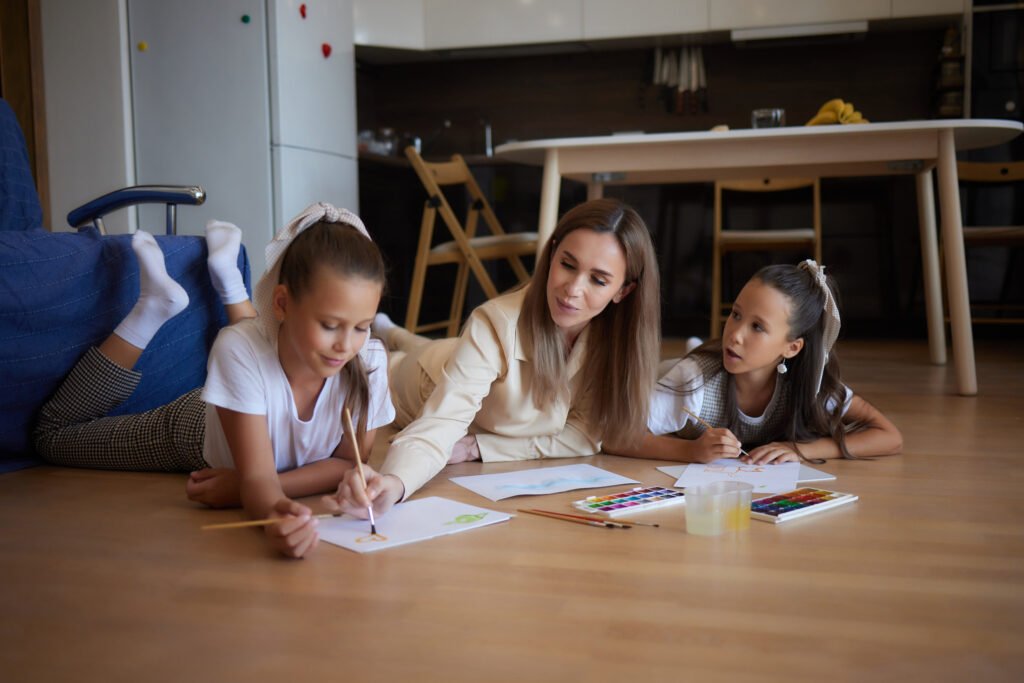
The Essential Kindergarten Readiness Skills (What to Focus On)
Let’s break down the skills that truly matter. For each, I’ll show you what “exposure” looks like at ages 3-4 and what “kindergarten-ready” looks like by age 5.
Social-Emotional Skills (THE Most Important!)
Why it matters: A child who can manage emotions, make friends, and ask for help will thrive in kindergarten—even if they don’t know all their letters yet.
Ages 3-4 Exposure:
- Names basic emotions (happy, sad, mad, scared)
- Shows empathy when others are upset (offers hug, shares toy)
- Shares and takes turns with reminders
- Plays cooperatively for short periods
- Calms down with adult support (deep breaths, hugs)
- Follows simple classroom rules
Kindergarten-Ready (Age 5):
- Identifies multiple emotions in self and others
- Uses words to express feelings instead of hitting/tantrums (most of the time)
- Shares and takes turns without constant reminders
- Handles disappointment without major meltdowns
- Makes friends and plays cooperatively
- Shows independence in seeking help or solutions
How to build this:
- Read books about feelings
- Talk about emotions daily (“I see you’re frustrated…”)
- Model emotional regulation (“I’m taking deep breaths because I’m upset”)
- Practice sharing and turn-taking in low-pressure situations
- Use our Social-Emotional Learning Activities consistently
Independence & Self-Care
Why it matters: Kindergarten teachers have 20+ students. Children need to handle basic self-care independently so teachers can focus on teaching.
Ages 3-4 Exposure:
- Uses bathroom with minimal help
- Washes hands (with reminders)
- Puts on jacket (might need help with zipper)
- Opens lunchbox and some containers
- Cleans up toys with guidance
- Carries backpack
Kindergarten-Ready (Age 5):
- Uses bathroom independently (including wiping, flushing, washing)
- Puts on and takes off jacket, shoes, backpack
- Opens all lunch containers
- Cleans up after activities
- Asks for help when needed
How to build this:
- Let them struggle a bit (resist doing everything for them!)
- Practice daily: “You try first, then I’ll help if needed”
- Create routines: hang up backpack, wash hands, put away shoes
- Use Montessori approach: “Help me to help myself”
Listening & Following Directions
Why it matters: Kindergarten involves group instruction. Children need to listen, process, and follow multi-step directions.
Ages 3-4 Exposure:
- Listens to short stories (5-10 minutes)
- Follows 1-2 step directions (“Get your shoes and put them by the door”)
- Responds when name is called
- Sits for circle time (10-15 minutes with wiggles)
- Understands basic position words (on, under, next to)
Kindergarten-Ready (Age 5):
- Listens to longer stories (15-20 minutes)
- Follows 3-step directions
- Stays seated during group instruction (20-30 minutes)
- Raises hand and waits to be called on
- Transitions between activities smoothly
How to build this:
- Give clear, simple directions at home
- Make it a game: “Can you remember all three things I asked you to do?”
- Read aloud daily (builds attention span)
- Practice circle time routines at home
- Use transition warnings: “In 5 minutes, we’ll clean up”
Fine Motor Skills
Why it matters: Writing, cutting, and manipulating classroom materials require hand strength and control.
Ages 3-4 Exposure:
- Holds crayon/marker (may use fist grip)
- Snips paper with scissors
- Strings large beads
- Completes 8-12 piece puzzles
- Uses glue bottles and glue sticks
- Builds with blocks and manipulatives
Kindergarten-Ready (Age 5):
- Holds pencil with tripod grip
- Cuts on straight and curved lines
- Writes first name (letters may be backwards/imperfect)
- Colors mostly within lines
- Uses scissors, glue, and tape independently
How to build this:
- Daily playdough (THE BEST fine motor builder!)
- Provide lots of cutting practice (see our Fine Motor Activities)
- Coloring, painting, drawing daily
- Let them help with real tasks: pouring, stirring, buttoning
- Don’t rush writing—focus on hand strength first
Early Literacy Skills
Why it matters: Strong pre-reading skills make learning to read easier in kindergarten.
Ages 3-4 Exposure:
- Recognizes some letters (especially from their name)
- Knows that print carries meaning
- Holds book correctly, turns pages
- Rhymes and plays with sounds
- “Writes” with scribbles and some letter-like shapes
- Enjoys being read to daily
Kindergarten-Ready (Age 5):
- Recognizes most letters (uppercase and lowercase)
- Knows some letter sounds
- Can write first name
- Understands that letters make words
- Recognizes some sight words (optional—not required!)
- Shows interest in reading
How to build this:
- Read aloud every single day (most important thing you can do!)
- Point out letters everywhere
- Play rhyming games
- Sing alphabet songs
- Let them “write” freely (scribbles are perfect!)
- Use our Preschool Literacy Activities playfully
Important: Most children do NOT read fluently before kindergarten. That’s normal and expected!
Early Math Skills
Why it matters: Number sense is the foundation for all future math.
Ages 3-4 Exposure:
- Counts to 10 (may skip numbers)
- Counts 5-10 objects with one-to-one correspondence
- Recognizes numerals 1-5
- Understands more/less, big/small
- Sorts by one attribute (color or size)
- Creates simple patterns (red-blue-red-blue)
- Identifies basic shapes (circle, square, triangle, rectangle)
Kindergarten-Ready (Age 5):
- Counts to 20+
- Counts 10-20 objects accurately
- Recognizes numerals 1-10
- Understands cardinality (last number = total)
- Sorts by multiple attributes
- Compares quantities
- Identifies and creates patterns
How to build this:
- Count EVERYTHING daily (stairs, snacks, toys)
- Play with patterns and sorting
- Use math language: more, less, equal, bigger, smaller
- Measure while cooking, compare heights
- Use our Preschool Math Activities in daily routines
Important: Your child does NOT need to add or subtract before kindergarten!
Month-by-Month Skill Progression for Ages 3-4 (What to Expect & Expose)
This progression shows you what to expose your child to at each age. Remember: this is EXPOSURE, not mastery! Every child develops at their own pace.

Age 3 (3.0-3.5 Years)
Social-Emotional:
- Names basic emotions
- Parallel play (playing near others)
- Shares with lots of reminders
- Big emotions, frequent meltdowns (normal!)
Independence:
- Tries to use bathroom independently (needs help)
- Feeds self with spoon/fork
- Puts on shoes (probably wrong feet!)
- Attempts to dress self
Cognitive/Academic:
- Recognizes 1-5 letters
- Counts to 5-10
- Identifies 3-4 colors
- Knows basic shapes
Communication:
- Speaks in 4-5 word sentences
- Asks “why?” constantly
- Follows 1-2 step directions
What to focus on: Building routines, emotional vocabulary, lots of play, reading aloud daily.
Age 3.5-4 (Midway)
Social-Emotional:
- Plays cooperatively (short periods)
- Beginning empathy
- Shares with fewer reminders
- Calms down with support
Independence:
- Uses bathroom mostly independently
- Dresses self (needs help with buttons/zippers)
- Washes hands without reminders
- Helps with simple chores
Cognitive/Academic:
- Recognizes 5-10 letters
- Counts to 10-15
- Counts 5-10 objects accurately
- Identifies primary and secondary colors
- Draws recognizable shapes and people
Communication:
- Speaks in complete sentences
- Tells simple stories
- Follows 2-3 step directions
What to focus on: More structured activities, early literacy/math exposure, independence practice.
Age 4-4.5 (Older 4s)
Social-Emotional:
- Cooperative play most of the time
- Shows consistent empathy
- Manages emotions better (but still needs support)
- Negotiates and problem-solves with peers
Independence:
- Fully independent bathroom use
- Dresses completely (except complex buttons)
- Pours drinks, serves snacks
- Responsible for belongings
Cognitive/Academic:
- Recognizes 10-20 letters
- Knows many letter sounds
- Counts to 20+
- Counts 10-15 objects
- Recognizes numerals 1-10
- Creates complex patterns
Communication:
- Complex sentences
- Tells detailed stories
- Asks sophisticated questions
- Follows multi-step directions
What to focus on: Pre-K skills, kindergarten prep, increased expectations (with support).
Remember: These are GENERAL milestones. Some 3-year-olds do what’s listed for 4s. Some 4-year-olds are still mastering 3-year-old skills. BOTH ARE NORMAL.
Get Free Learning Activities!
Join thousands of parents and teachers who receive our best activities, tips, and printables every week. Plus, get instant access to our exclusive resource library!
No spam, ever. Unsubscribe anytime.
How Structured Curriculum Reduces Anxiety (For Parents AND Kids!)
If you’re a first-time homeschool mom or anxious parent, a structured, well-planned curriculum is your secret weapon.
Why structure matters:

For Parents: You’re Not Guessing Anymore
Without structure:
- “Am I teaching the right things?”
- “Did I forget something important?”
- “What should we do today?”
- Constant second-guessing and anxiety
With structured curriculum:
- Clear roadmap month by month, week by week
- Confidence that all skills are being covered
- No more Sunday night scrambling for activities
- Trust in the process
Example: Our Complete Preschool Curriculum tells you EXACTLY what to do each week. You don’t need to guess if you’re covering everything—we’ve already organized it for you, following early childhood development best practices.
For Kids: Predictability = Security
Without structure:
- Random activities with no progression
- Child senses parent’s uncertainty
- Inconsistent expectations
- No sense of “what’s next”
With structured curriculum:
- Predictable daily routines
- Skills build logically (simple → complex)
- Child feels secure knowing what to expect
- Clear progression shows child they’re growing
Example: When your curriculum introduces letter A in week 1, practices it in week 2, reviews it in week 3, then moves to letter B, your child’s brain recognizes the pattern. Learning feels manageable, not overwhelming.
Structured ≠ Rigid!
Important distinction: Structured curriculum provides the framework. YOU provide the flexibility.
What structure gives you:
- Organized scope and sequence
- Age-appropriate activities
- Skill progression that makes sense
- Materials and printables ready to go
What you control:
- Pace (skip ahead, slow down, repeat)
- Activities (choose favorites, skip ones that don’t work)
- Adaptations (make it yours!)
- Fun factor (silly voices, dance breaks, outdoor learning)
Think of curriculum like a GPS: it shows you the best route, but you can take detours, make stops, and adjust as needed.
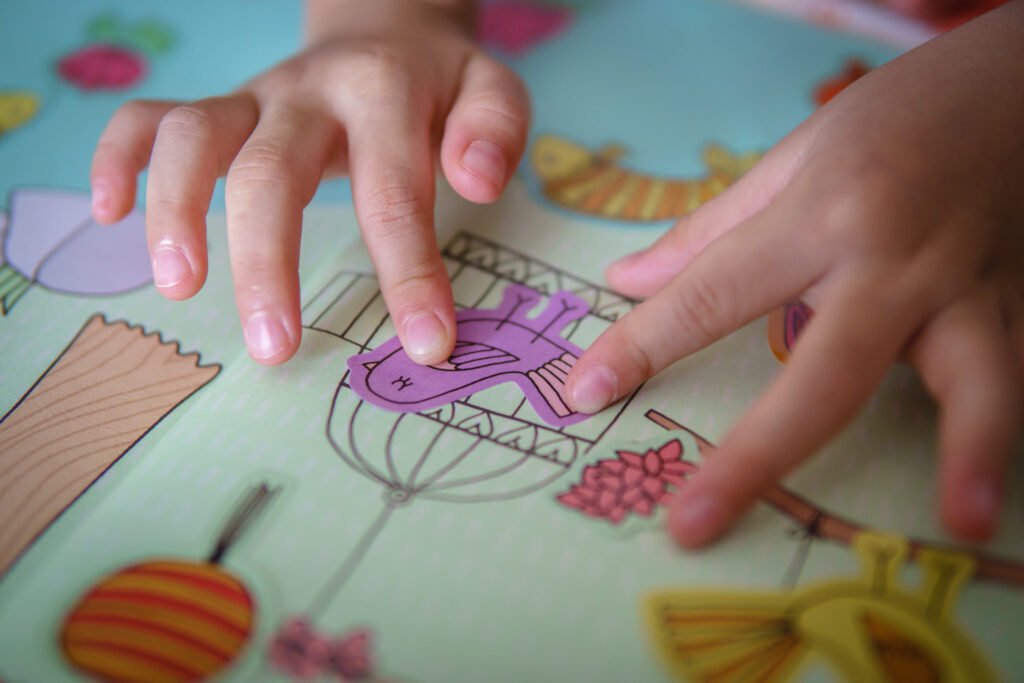
Celebrating Progress Without Pressure (The Balanced Approach)
This is the key to kindergarten readiness: exposing children to skills, providing practice opportunities, celebrating growth—without creating anxiety or shame.

The “Notice & Name” Method
Instead of quizzing or testing, simply NOTICE progress and NAME it.
Instead of: “What letter is this? Come on, you know this. We practiced yesterday!”
Try: “You recognized the M! You’re really noticing letters now. I remember when you didn’t know any letters, and now you know several!”
Why it works: No pressure, just acknowledgment. The child feels proud without feeling tested.
Celebrate Effort, Not Just Success
Instead of: “You didn’t cut on the line. Try again.”
Try: “You’re working so hard with those scissors! Your hands are getting stronger every day. Look how much better this is than last month!”
Why it works: Builds growth mindset. Effort and progress matter more than perfection.
Normalize Struggle & Mistakes
Instead of: “That’s wrong. Do it the right way.”
Try: “That’s tricky, isn’t it? Let’s try together. Everyone learns by making mistakes and trying again!”
Why it works: Mistakes become part of learning, not something to avoid or feel ashamed of.
Compare to THEIR Past Self, Not Other Kids
Instead of: “Your friend already knows all her letters. You need to practice more.”
Try: “Last month you recognized 3 letters. Now you recognize 7! You’re learning so many!”
Why it works: Honors their unique timeline. Removes comparison anxiety.
Make It Playful, Not Drill-Based
Instead of: “Sit down. We’re doing letter flashcards for 30 minutes.”
Try: “Let’s go on a letter hunt outside! Can you find the letter M on signs or buildings?”
Why it works: Learning through play = engagement + retention without pressure.
When to Worry vs. When to Relax (Red Flags vs. Normal Variation)
Not all delays are concerning. Here’s how to know when to seek help vs. when to give more time.
Normal Variation (Relax!)
These are normal and NOT concerning at ages 3-4:
✅ Knows only a few letters (3-10 is normal for age 4)
✅ Counts to 10 but skips numbers
✅ Writes name with backwards letters
✅ Can’t sit still for long periods
✅ Still has tantrums when frustrated
✅ Mixes up left and right
✅ Confuses b and d, p and q
✅ Can’t read yet (most can’t!)
✅ Needs help with buttons and zippers
✅ Struggles with sharing
What to do: Keep providing exposure, practice, and patience. They’re developing normally!
Possible Red Flags (Talk to Pediatrician)
Consider evaluation if by age 4-4.5 your child:
⚠️ Shows NO interest in books or being read to
⚠️ Can’t recognize ANY letters
⚠️ Can’t count 5 objects with one-to-one correspondence
⚠️ Doesn’t speak in sentences
⚠️ Can’t follow simple 1-step directions
⚠️ Avoids all fine motor activities (never draws, won’t touch playdough)
⚠️ Can’t separate from parent for short periods
⚠️ Shows no interest in playing with other children
⚠️ Has extreme difficulty with transitions (major meltdowns daily)
⚠️ Doesn’t make eye contact or respond to name consistently
What to do: Talk to your pediatrician. Early intervention makes a HUGE difference. Many “delays” resolve quickly with support.
Important: One or two of these doesn’t mean a problem. Look for PATTERNS across multiple areas.
Kindergarten Readiness Checklist (Print & Use!)
Use this checklist as a guide, not a test. Check off what your child can do, note what they’re working on. This is progress tracking, not pass/fail!
Social-Emotional Skills:
- Names basic emotions (happy, sad, mad)
- Shows empathy when others are upset
- Shares and takes turns (with reminders)
- Plays cooperatively with peers
- Separates from parent without extreme distress
- Handles disappointment without major meltdowns (most of the time)
- Follows basic classroom rules
Independence & Self-Care:
- Uses bathroom independently
- Washes hands without reminders
- Puts on jacket and shoes
- Opens lunchbox and most containers
- Cleans up toys when asked
- Asks for help when needed
Listening & Following Directions:
- Sits for short group activities (10-15 min)
- Follows 2-3 step directions
- Responds when name is called
- Raises hand and waits (emerging skill)
- Transitions between activities
Fine Motor Skills:
- Holds crayon/pencil (grip improving)
- Cuts with scissors (straight lines)
- Strings beads
- Completes puzzles (8-12 pieces)
- Uses glue stick/bottle
- Beginning to write name (scribbles/some letters)
Early Literacy:
- Recognizes 10+ letters
- Knows that print carries meaning
- “Writes” with scribbles/letter-like shapes
- Enjoys being read to
- Can retell simple stories
- Rhymes simple words
Early Math:
- Counts to 10-20
- Counts 10 objects with one-to-one correspondence
- Recognizes numerals 1-10
- Identifies basic shapes
- Sorts objects by attributes
- Understands more/less, big/small
Communication:
- Speaks in complete sentences
- Can be understood by strangers
- Tells simple stories
- Asks questions
- Follows conversations
Frequently Asked Questions About Kindergarten Readiness
Should my 4-year-old know how to read before kindergarten? No! Most children do NOT read before kindergarten. Reading typically develops DURING kindergarten and 1st grade. Focus on pre-reading skills: letter recognition, letter sounds, rhyming, and love of books.
My child doesn’t know all their letters yet. Should I be worried? If they’re 3-4 years old, no! Knowing 5-15 letters at age 4 is normal. By kindergarten entry (age 5-5.5), most know the majority of letters. Keep exposing them through play, books, and environment—don’t drill.
What if my child struggles with skills that seem easy for other kids? Every child develops at their own pace. Some 3-year-olds write their name; others don’t until age 5. Both are normal. Focus on YOUR child’s progress, not comparisons. If by age 5 there’s no progress despite consistent exposure, talk to your pediatrician.
How much structured learning should a 3-4 year old do? 30-60 minutes of loosely structured activities is plenty. The rest should be free play, outdoor time, read-alouds, and daily life learning (cooking, cleaning, conversations). At this age, play IS learning.
Is it better to hold my child back or send them on time? This depends on many factors: their birthday, maturity level, kindergarten requirements in your area. Generally, if they meet most readiness skills and are close to the cutoff age, they’re fine to go. If they’re young for their grade AND struggling, consider waiting. Discuss with your pediatrician and school.
What if we’re homeschooling—do we even need “kindergarten readiness”? You still want to build these foundational skills! They’re not just for school—they’re for life. Social skills, independence, emotional regulation, curiosity—these matter whether you homeschool or not. But you have more flexibility in timeline.
Can a structured curriculum really cover everything needed? Yes! A well-designed preschool curriculum covers all developmental domains: literacy, math, science, social-emotional, fine motor, gross motor, and independence. You don’t need to piece together separate programs. One comprehensive curriculum (like ours!) does it all.
Conclusion: You’re Preparing Them Beautifully
Every time you read aloud, play a counting game, let them practice buttoning, or help them name their feelings, you’re building kindergarten readiness.
It’s not about perfection. It’s not about being ahead. It’s about providing rich experiences, consistent routines, and lots of love as they grow.
Remember:
- Exposure > mastery at ages 3-4
- Progress > perfection
- Process > product
- Play > worksheets
- Connection > curriculum
- Your child’s pace is the right pace
You’ve got this. And on days when you doubt yourself, remember: you’re here, learning, planning, and caring. That makes you an excellent parent/teacher.
Continue your kindergarten prep journey:
- Toddler Alphabet Workbook – Animal Sounds Habitats Dot Marker Tracing Fine Motor Ages 2-4
- Pre-K Kindergarten Animal Alphabet Workbook – Habitats Tracing Handwriting Dot Marker
- My Busy Book – Cut Match Activities for Preschool and Kindergarten
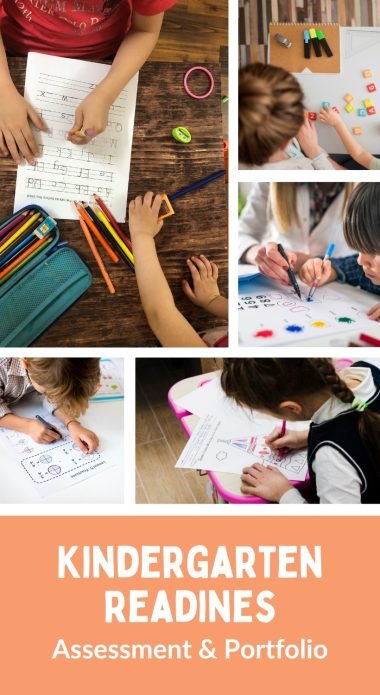
- Preschool Skills Assessment – Pre-K Portfolio Kindergarten Readiness
- Ultimate Homeschool Planner – Complete Learning Kit
Want kindergarten readiness built into every week? Our Complete Preschool Curriculum provides month-by-month, week-by-week structure with all activities organized by skill progression. No guessing, no gaps, no anxiety—just a clear path from ages 3-4 to kindergarten ready. Everything is included: lesson plans, printables, instructions, and realistic expectations that celebrate your child’s unique journey.