Description
Target Audience: Preschool teachers + Daycare providers + Homeschool moms
Primary Keyword: “circle time activities preschool” (3,200 searches/mês)
Secondary Keywords: “preschool circle time ideas”, “morning meeting preschool”, “calendar time activities”
Meta Description (158 caracteres): “Circle time activities for preschool ages 3-4 that keep kids engaged. Songs, games, calendar ideas & no-prep activities for morning meeting time!”
Circle time. For some teachers, it’s the magical moment when children sit attentively, sing songs, and joyfully participate. For others, it’s 15 minutes of chaos—kids rolling around, wandering off, and calling out randomly.
If you’re in the second camp, you’re not alone. Circle time with 3-4 year olds can feel like herding cats. Their attention spans are short (about 10-15 minutes max), they’re wiggly, and they struggle to sit still.
But here’s the good news: circle time doesn’t have to be perfect to be effective. And with the right activities—short, engaging, interactive—you can create a circle time that kids actually look forward to.
Whether you’re a preschool teacher managing a classroom of 15 wigglers, a daycare provider with mixed ages, or a homeschool mom doing circle time with one or two children, this guide will transform your morning meetings.
What you’ll discover:
- Why circle time matters (and what to include)
- How long circle time should actually be
- The proven structure that keeps kids engaged
- 50+ no-prep activities for every part of circle time
- Songs, games, and movement activities kids love
- How to handle kids who won’t sit still
- What to do when circle time goes off the rails
Let’s make circle time the highlight of your preschool day!
What Is Circle Time? (And Why It Matters)
Circle time (also called morning meeting, carpet time, or group time) is when children gather together for learning, connection, and community building.
What circle time accomplishes:
Building Community – Children learn they’re part of a group. They hear each other’s voices, learn names, and develop a sense of belonging.
Establishing Routines – Predictable circle time routines help children know what to expect, reducing anxiety and behavior issues.
Developing Listening Skills – Sitting together, taking turns, listening while others speak—these are essential school readiness skills.
Learning Academic Concepts – Calendar, weather, counting, letters, days of the week—all taught in an engaging group context.
Practicing Social Skills – Raising hands, waiting for turns, staying in personal space, following group rules.
Setting the Tone – A positive, engaging circle time creates momentum for the rest of the day.
Important truth: Circle time for ages 3-4 should be SHORT (10-15 minutes maximum), ACTIVE (lots of movement and participation), and PREDICTABLE (same structure every day).

The Perfect Circle Time Structure for Ages 3-4
The key to successful circle time is a consistent structure. Children thrive on predictability—when they know what comes next, they feel safe and can participate fully.
The proven circle time framework (10-15 minutes total):

2. Calendar & Weather (3-4 minutes)
Quick review of date, day of the week, month, season, and weather.
Why it works: Builds time concepts, pattern recognition, and observation skills. Plus kids love being the “weather reporter!”
Keep it interactive: Have a child point to today’s date, another child look out the window and report weather, everyone sing the days of the week song together.
3. Theme Introduction or Story (3-5 minutes)
This is where you connect to your weekly theme or introduce new concepts.
Why it works: Gives focus to your learning for the day. Creates excitement about upcoming activities.
Options:
- Read a very short book related to your theme
- Show a prop or picture and ask questions
- Introduce a new letter or number
- Sing a song connected to your theme
4. Interactive Activity or Game (3-5 minutes)
This is the “fun” part—an active game, movement song, or interactive activity.
Why it works: Gets the wiggles out! Movement helps young children focus. Interactive activities keep them engaged.
Examples:
- Movement songs with actions
- Quick game (I Spy, Simon Says)
- Pass an object around the circle
- Action rhymes
- Call and response chants
5. Closing Routine (1-2 minutes)
End the same way every day to signal transition.
Why it works: Clear endings prevent confusion. Children know what comes next.
Examples:
- Closing song (“It’s time to go to centers…”)
- Review: “Today we’re going to…”
- Dismissal routine (call kids by clothing color, birthday month, etc.)
Total time: 12-15 minutes. If kids are losing focus before this, END EARLY. Better to end while they’re engaged than push through chaos.
Opening Songs & Greetings (Start Strong!)
The opening song sets the tone for everything that follows. Choose one and use it consistently for at least a month before changing.
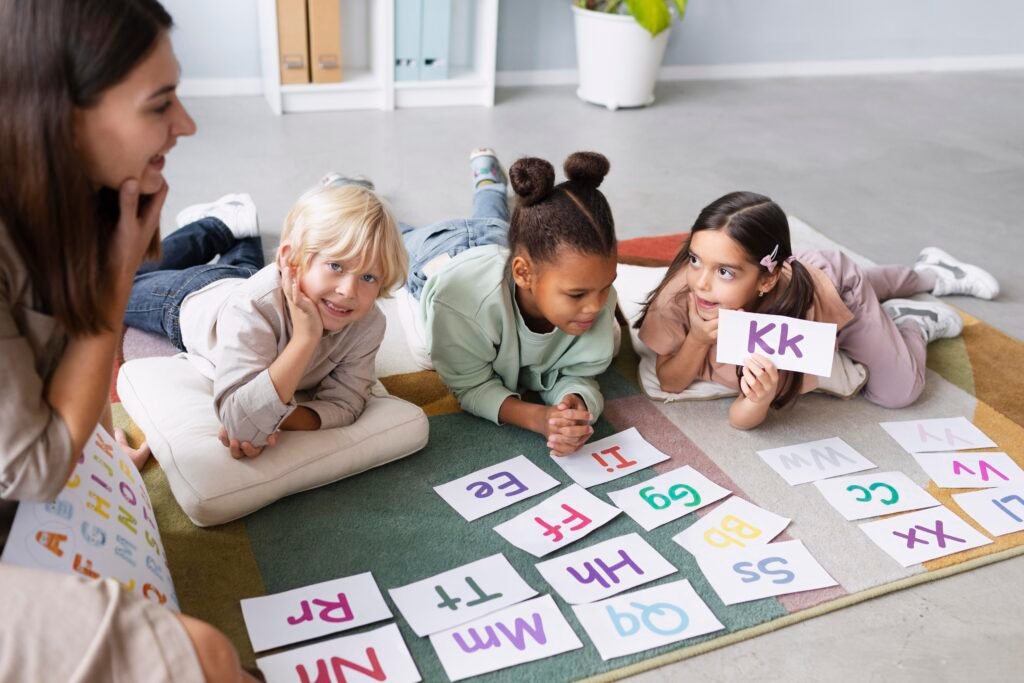
Good Morning Songs
- “Good Morning to You” (Tune: Happy Birthday) Good morning to you,
Good morning to you,
Good morning dear [child’s name],
Good morning to you!
Go around the circle singing to each child. They feel special and everyone practices names.
- “Hello, Hello” (with Actions) Hello, hello, hello and how are you? (wave)
I’m fine, I’m fine, and I hope that you are too! (thumbs up)
Simple, repetitive, with hand motions = perfect for preschool.
- “If You’re Happy and You Know It” (Greeting Version) If you’re here today and you know it, clap your hands! (clap clap)
If you’re here today and you know it, clap your hands! (clap clap)
If you’re here today and you know it, then your smile will surely show it,
If you’re here today and you know it, clap your hands! (clap clap)
Add verses: stomp your feet, say “hooray!”, touch your nose, etc.
- “Good Morning Song” (Tune: Frere Jacques) Good morning, good morning,
How are you? How are you?
I’m very glad to see you,
I’m very glad to see you,
Good morning! Good morning!
Simple melody, easy to learn, creates warmth.
Name Recognition Activities
- Name Song with Photo Chart Create a photo chart with each child’s picture and name. Point to each photo while singing: “Where is [child’s name]? Where is [child’s name]? There they are! There they are!”
- “Who Is Here Today?” Song [Child’s name] is here today, here today, here today,
[Child’s name] is here today, hip-hip-hooray!
Each child stands when their name is sung.
- Call and Response Name Game Teacher: “Is [child’s name] here?”
Everyone: “Yes! [Name] is here!”
[Child] stands and does a silly action (spin, jump, wave). - Pass the Greeting One child says “Good morning, [next child’s name]” and passes a beanbag. That child receives it, says thank you, then greets the next person. Goes around the full circle.
Calendar & Weather Activities (Making It Interactive)
Calendar time can be deadly boring or delightfully engaging—it depends on participation level.
Calendar Activities
- Interactive Calendar Board Have a child come up to:
- Point to today’s date
- Count how many days we’ve been in school
- Identify the day of the week
- Move the “yesterday/today/tomorrow” arrow
- Days of the Week Song (Tune: Addams Family) Days of the week! (snap snap)
Days of the week! (snap snap)
Days of the week, days of the week, days of the week! (snap snap)
There’s Sunday and there’s Monday,
There’s Tuesday and there’s Wednesday,
There’s Thursday and there’s Friday,
And then there’s Saturday!
Days of the week! (snap snap)
Kids love the snapping!
- Months of the Year Chant January, February, March, April, May,
June and July, August hooray!
September, October, November, December,
These are the months that we remember!
Add clapping or stomping for rhythm.
- Pattern Recognition with Calendar “Look at our calendar! Red, blue, red, blue… what comes next?” Point out patterns in the dates.
- Yesterday, Today, Tomorrow Ask: “What did we do yesterday? What are we doing today? What will we do tomorrow?” This builds time concepts.
Weather Activities
- Weather Chart with Pictures Create a chart with weather symbols: sunny, cloudy, rainy, snowy, windy. Have a child look out the window and point to today’s weather.
- Weather Song (Tune: Oh My Darling Clementine) What’s the weather? What’s the weather?
What’s the weather like today?
Is it sunny? Is it cloudy?
Is it rainy? Let’s all say!
Then everyone shouts the weather together.
- Weather Actions Sunny = stretch arms up like sunshine
Rainy = wiggle fingers down like rain
Windy = blow and sway side to side
Snowy = shiver and say “brrrr!”
Cloudy = make fluffy shapes with arms
Do the action for today’s weather.
- Temperature Check Show a simple thermometer. Is it hot, warm, cool, or cold outside? Dress a paper doll accordingly.
- Season Discussion “What season is it? What do we see in [fall/winter/spring/summer]?” Point to a season chart and name characteristics.
Get Free Learning Activities!
Join thousands of parents and teachers who receive our best activities, tips, and printables every week. Plus, get instant access to our exclusive resource library!
No spam, ever. Unsubscribe anytime.
Theme Introduction & Learning Activities
This is where you introduce new concepts, letters, numbers, or themes. Keep it SHORT and INTERACTIVE.
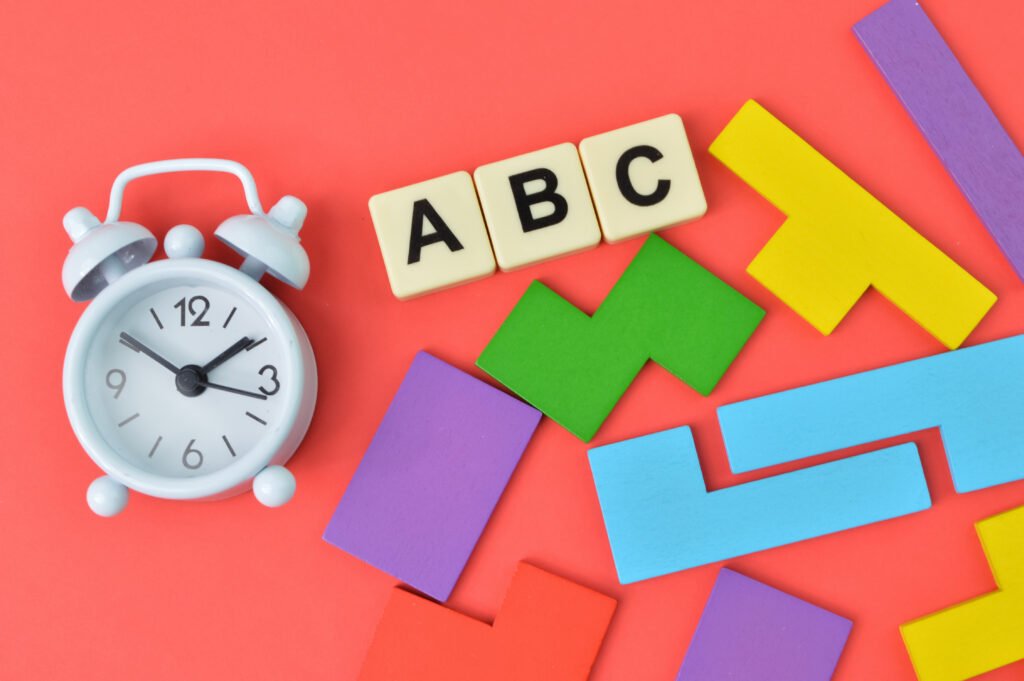
Letter of the Week Activities
- Letter Introduction with Actions Introduce the letter with an action. For B: “B says /b/ /b/ /b/ like BOUNCE!” Everyone bounces. For J: “J says /j/ /j/ /j/ like JUMP!” Everyone jumps.
- Letter Hunt Show the letter. “This is the letter M! Can you find the letter M on our alphabet chart? Who has M in their name?”
- Object Pass – Beginning Sounds Pass around an object that starts with the letter of the week. “This is a ball. Ball starts with B! Can you say ‘B – ball’?”
- Letter Songs Use letter songs like “The Letter B Song” or make up your own: “B is for ball, B is for bear, B is for banana, B is everywhere!”
Number & Counting Activities
- Number of the Day “Today’s number is 3! Let’s clap 3 times. Let’s stomp 3 times. Can you hold up 3 fingers?”
- Counting Kids “How many friends are at circle time today? Let’s count!” Count each child, touching heads gently or having them stand as counted.
- Number Songs “Five Little Monkeys,” “Five Green and Speckled Frogs,” “Ten in the Bed”—use visual props or finger counting.
- Number Actions “I’m thinking of a number between 1 and 5. It’s the number that comes after 2. What is it? That’s right—3! Let’s do 3 jumps!”
Theme-Related Activities
- Mystery Bag Put an object related to your weekly theme in a bag. Give clues. Kids guess. Pull it out and discuss.
- Picture Talk Show a large picture related to your theme (farm animals, ocean creatures, fall leaves). Ask open-ended questions: “What do you see? What do you notice? What do you wonder?”
- Prop Introduction Introduce a puppet, stuffed animal, or prop related to your theme. Have it “talk” to the kids, ask questions, be silly.
- Very Short Story Read a 2-3 minute book related to your theme. Choose books with repetition, predictable text, or lots of pictures.
Movement Songs & Interactive Games (The Fun Part!)
This is where you burn energy and get full participation. Movement = engagement for young children.
Classic Movement Songs
- “Head, Shoulders, Knees and Toes” Everyone knows this one! Start slow, speed up. Kids love the challenge.
- “If You’re Happy and You Know It” Clap hands, stomp feet, shout hooray, do all three! Add your own verses: snap fingers, touch your nose, give a hug.
- “The Hokey Pokey” Put your right hand in, put your right hand out… perfect for body awareness and following directions.
- “Shake Your Sillies Out” (Raffi) I gotta shake, shake, shake my sillies out,
Shake, shake, shake my sillies out,
Shake, shake, shake my sillies out,
And wiggle my waggles away!
Continue with: jump, clap, stretch, yawn…
- “Freeze Dance” Play music. Kids dance. When music stops, FREEZE! Anyone who moves sits down (or just keeps playing—your choice).
- “Five Little Ducks” Five little ducks went out one day,
Over the hills and far away,
Mother duck said, “Quack quack quack quack,”
But only four little ducks came back!
Use fingers to count down. Kids love the drama of ducks disappearing and coming back.
- “Open Shut Them” Open shut them, open shut them, give a little clap clap clap!
Open shut them, open shut them, lay them in your lap lap lap!
Add verses: roll them, put them high/low, etc. Great for following directions.
- “The Wheels on the Bus” Classic with actions. Add verses: parents say “I love you,” kids say “me too,” etc.
Action Rhymes & Fingerplays
- “Two Little Blackbirds” Two little blackbirds sitting on a hill, (hold up pointer fingers)
One named Jack, one named Jill. (wiggle each finger)
Fly away Jack, fly away Jill! (put hands behind back)
Come back Jack, come back Jill! (bring hands back)
Simple, sweet, teaches names and actions.
- “5 Little Monkeys Jumping on the Bed” Act it out! Kids LOVE the drama of monkeys falling and doctor saying “No more monkeys jumping on the bed!”
- “Zoom Zoom Zoom, We’re Going to the Moon” Zoom zoom zoom, we’re going to the moon!
Zoom zoom zoom, we’ll get there very soon!
5, 4, 3, 2, 1… BLAST OFF! (jump up) - “Open Them, Shut Them” (see #37)
- “Where Is Thumbkin?” Where is Thumbkin? Where is Thumbkin? (hands behind back)
Here I am! Here I am! (bring out thumbs)
How are you today, sir? Very well, I thank you!
Run away, run away! (put hands back)
Continue with pointer, tall man, ring man, pinky.
Circle Games
- “Duck, Duck, Goose” One child walks around the circle tapping heads saying “duck, duck, duck… GOOSE!” Tagged child chases them around the circle.
- “Pass the Beanbag” Pass a beanbag around the circle while music plays. When music stops, whoever has the beanbag stands and does an action (jump, spin, clap).
- “Hot Potato” Similar to pass the beanbag but with a soft ball. Pass quickly while music plays!
- “I Spy” “I spy with my little eye something… RED!” Kids guess objects in the room. Great for color, shape, and vocabulary learning.
- “Simon Says” Classic game! “Simon says touch your nose! Simon says jump! Sit down!” (whoever sits is out because Simon didn’t say!)
- “Follow the Leader” One child is the leader and does an action. Everyone copies. Switch leaders frequently.
- “Telephone Game” Whisper a word or short phrase to the first child. They whisper to the next. Goes around the circle. Last child says it out loud—usually hilarious!
Transition & Closing Activities (Ending Well)
How you end circle time matters. A clear closing prevents chaos and helps kids transition smoothly.
H3: Dismissal Routines
- Call by Categories “If you’re wearing red, you may go to centers!”
“If your name starts with M, you may line up!”
“If you’re 4 years old, you may get your snack!” - Goodbye Song (Tune: Good Night Ladies) Goodbye friends, goodbye friends,
Goodbye friends, it’s time to go and play!
Merrily we’ll learn together,
Learn together, learn together,
Merrily we’ll learn together,
All throughout the day! - Quiet Dismissal “I’m looking for someone sitting very quietly with hands in lap to line up… I choose [name]!”
- Secret Signal “When I tap your shoulder, tiptoe quietly to the door.” Go around tapping each child.
- Countdown “In 5 seconds, we’ll clean up circle time. 5… 4… 3… 2… 1… Clean up time!”
H3: Review & Preview
- “What Did We Learn?” Quick review: “Today we learned about the letter B! We talked about bears! We counted to 10!” Keep it to 30 seconds.
- “What’s Coming Next?” “After circle time, we’re going to centers! Then we’ll have snack! Then we’ll play outside!” Preview helps kids prepare mentally.
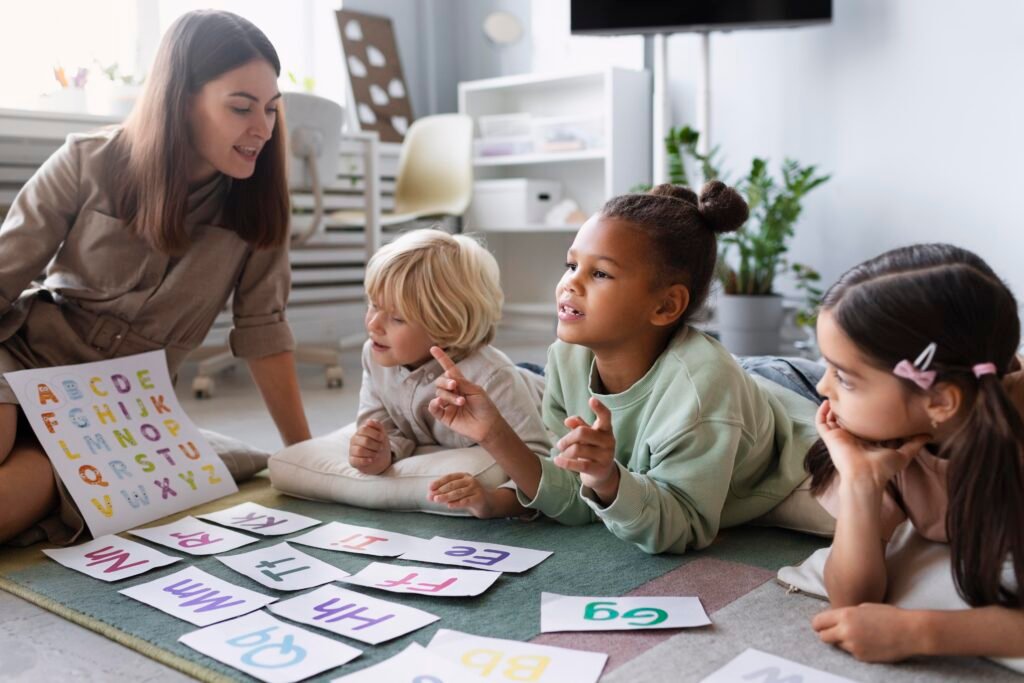
How to Handle Circle Time Challenges
Let’s get real: circle time with preschoolers is rarely perfect. Here’s how to handle common issues.
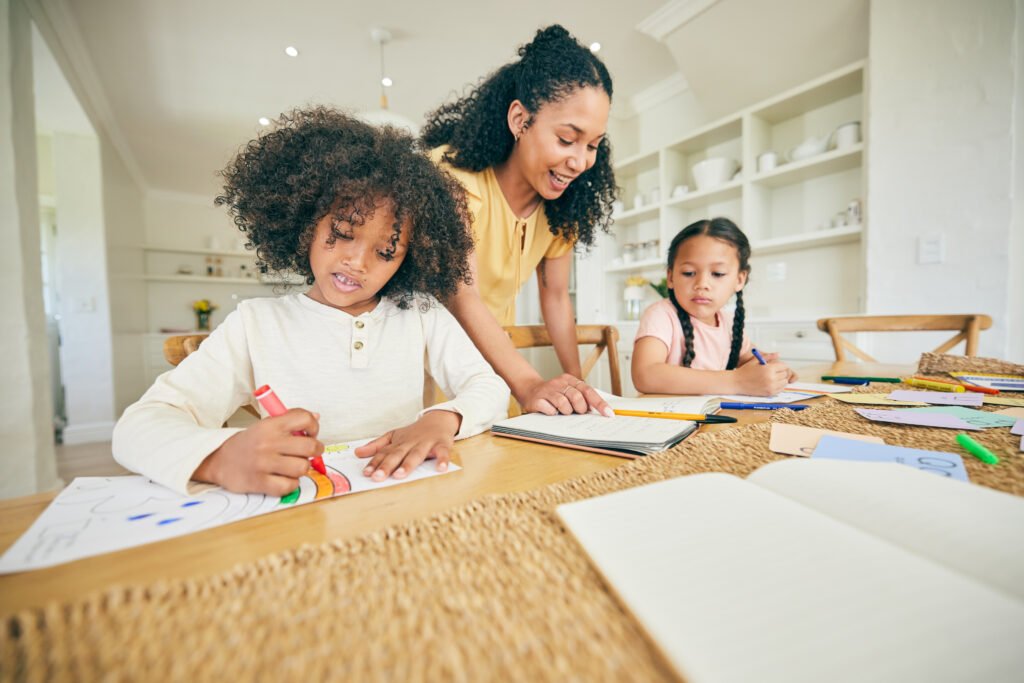
“My Kids Won’t Sit Still!”
Solutions:
- Shorten circle time (10 minutes max for 3-year-olds)
- Add MORE movement (sitting still is hard for this age!)
- Let them hold a fidget object (small toy, stuffed animal)
- Use a sit spot (carpet square, taped X) to define personal space
- Stand in circle instead of sit sometimes
- Wiggle breaks between activities
Remember: Some wiggling is developmentally normal. As long as they’re listening, wiggling is okay!
“One Child Disrupts Everyone”
Solutions:
- Seat them next to you
- Give them a special job (holding the book, being weather reporter)
- Provide a quiet fidget
- If behavior continues, have them sit just outside the circle where they can still see/hear
- Individual positive attention: “Thank you for sitting so nicely, [name]!”
Avoid power struggles. Stay calm, set clear expectations, follow through consistently.
“Kids Call Out Instead of Raising Hands”
Solutions:
- Model: “I love how [name] raised their hand quietly!”
- Use a talking stick/object—only person holding it talks
- Practice: “Let’s practice raising hands. Everyone show me!”
- Ignore call-outs, only respond to raised hands
- For 3-year-olds, expect call-outs—it’s normal!
Be patient. Turn-taking is a skill that develops over time.
“My Child Won’t Participate at Home”
For homeschool families:
Solutions:
- Make it optional but inviting
- Shorten it (5-7 minutes)
- Let THEM lead parts of it
- Use props and toys they love
- Don’t force it—some kids need more time
- Consider doing “circle time” activities throughout the day instead
Remember: Circle time is less critical when teaching one or two kids. You’re getting individual attention all day!
No-Prep Circle Time Tips for Busy Teachers
- Create a Visual Schedule Laminate pictures showing each part of circle time in order. Kids know what comes next.
- Use the Same Songs for a Month Don’t change songs weekly. Repetition builds confidence and participation.
- Keep Props in a Circle Time Basket Calendar pointer, weather chart, special puppet, talking stick—all in one place. Grab and go!
- Prep the Night Before If you’re introducing something new, have materials ready. But most circle time should be routine—minimal prep needed.
- Have a Backup Plan When a planned activity flops, pivot to a reliable favorite (freeze dance, I Spy, favorite song).
6. Don’t Overthink It Circle time doesn’t need to be elaborate. Simple, consistent, engaging > fancy and stressful.
Frequently Asked Questions About Circle Time
How long should circle time be for 3-4 year olds? 10-15 minutes MAXIMUM. For young 3s or children with attention difficulties, 7-10 minutes is better. If kids are losing focus, end early. Quality over duration.
What if my kids won’t sit in a circle? Sitting in a circle is a skill that takes practice. Use visual sit spots (tape squares or give carpet squares). Model sitting “criss-cross applesauce.” Praise those who do it. Be patient—it will come. Also: standing circles work too!
Should circle time be mandatory? For classrooms, yes—it’s part of the routine. But if a child is having a very hard day, allow them to sit nearby and observe rather than forcing participation. For homeschool, it can be more flexible.
Can I do circle time with just one or two kids? Absolutely! It’s more like a family meeting or cozy read-together time. Shorten it (5-7 minutes) and make it conversational. The structure and routine still provide value.
What if a child is always disruptive during circle time? First rule out why: Are they hungry? Tired? Is circle time too long? Do they need more movement? Once you understand the why, provide support: sit next to you, give a fidget, assign a job, provide movement breaks. Consistency and patience are key.
My kids don’t know any of the songs. How do I teach them? Sing the same songs EVERY DAY for at least 2-4 weeks. Repetition is how young children learn. Add hand motions (visual + auditory learning). Soon they’ll know them by heart and feel confident participating.
Conclusion: Circle Time Can Be Your Favorite Part of the Day
When circle time works, it’s magical—children singing together, engaged and happy, building community and learning joyfully.
It won’t be perfect every day. Some days kids will be wiggly, distracted, or silly. And that’s okay. What matters is consistency, warmth, and realistic expectations.
Keys to successful circle time:
- Keep it SHORT (10-15 minutes max)
- Make it ACTIVE (lots of movement and participation)
- Keep it PREDICTABLE (same structure daily)
- Make it FUN (songs, games, silliness welcome!)
- Be FLEXIBLE (if it’s not working, change it up)
Continue building your preschool program:
- Toddler Alphabet Workbook – Animal Sounds Habitats Dot Marker Tracing Fine Motor Ages 2-4
- Pre-K Kindergarten Animal Alphabet Workbook – Habitats Tracing Handwriting Dot Marker
- My Busy Book – Cut Match Activities for Preschool and Kindergarten
- Preschool Skills Assessment – Pre-K Portfolio Kindergarten Readiness
- Ultimate Homeschool Planner – Complete Learning Kit
Want a full year of circle time activities planned for you? The Complete Preschool Curriculum includes weekly fine motor activities, printables, and no-prep ideas for the entire year!
Looking for monthly and seasonal preschool unit themes? We also offer monthly preschool and Pre-K curriculum units with ready-to-use lesson plans, printables, and activities for themes like Back to School, Thanksgiving, Christmas, Fall, Winter, Spring, Easter, and more.
👉 Explore our Monthly Preschool Curriculum Units ★