Description
Target Audience: Homeschool moms + Daycare providers Primary Keyword: “preschool math activities” (4,400 searches/mês) Secondary Keywords: “counting activities for preschoolers”, “number recognition preschool”, “math games for 3 year olds”
Meta Description (157 caracteres): “Easy preschool math activities for ages 3-4. Counting games, number recognition & hands-on math ideas using household items. Free printables!”
Your preschooler is constantly counting—their toys, the stairs, crackers at snack time. They’re sorting their blocks by color and building towers “as tall as the sky!” They might not realize it, but they’re doing math.
Here’s the secret about preschool math: it doesn’t look like worksheets or flashcards. Real math for 3-4 year olds happens through play, exploration, and everyday moments—counting socks while folding laundry, measuring ingredients while baking, comparing who has more crackers at snack time.
Whether you’re a homeschool mom wondering how to teach math without formal curriculum, a daycare provider looking for engaging activities, or a preschool teacher wanting fresh ideas, this guide is for you.
What you’ll discover:
- What math skills 3-4 year olds actually need (it’s not addition!)
- Why counting objects matters more than reciting numbers
- 30+ hands-on math activities using things you already own
- How to weave math into your everyday routines
- Common mistakes that confuse young learners
- Free printable math games
Let’s make math fun, hands-on, and meaningful for your little mathematician!
What Math Skills Do 3-4 Year Olds Need?
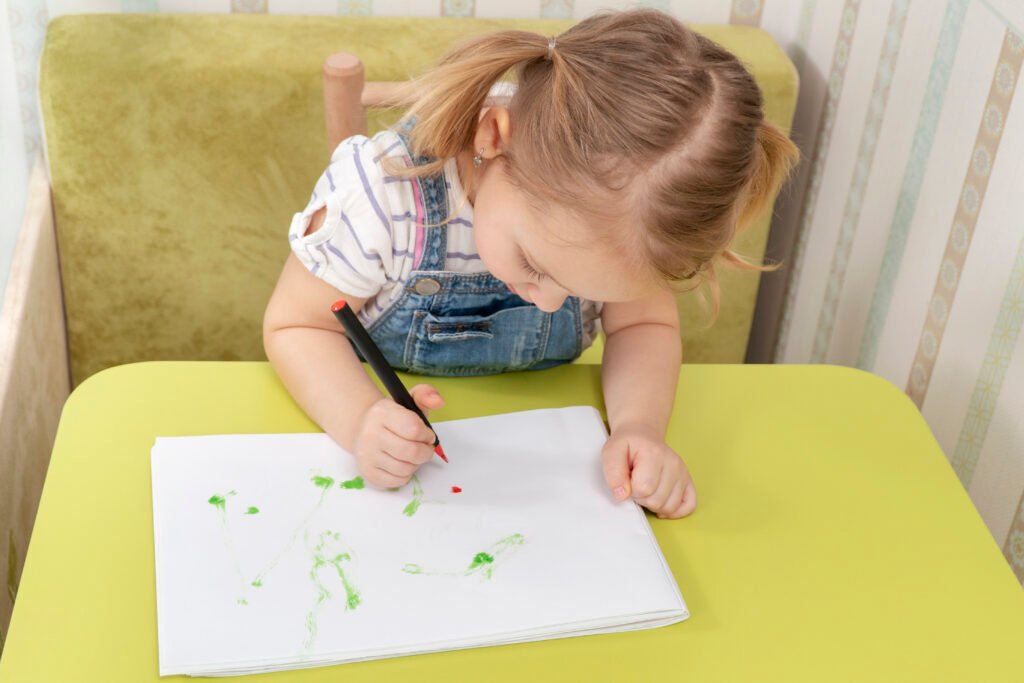
Forget flashcards and worksheets. Preschool math is about building number sense—an intuitive understanding of quantities and how numbers work in the real world.
The essential math skills for ages 3-4:
Rote Counting – Saying numbers in order: “1, 2, 3, 4, 5…” Most 3-year-olds can count to 10. Many 4-year-olds can count to 20 or beyond. But here’s what matters more…
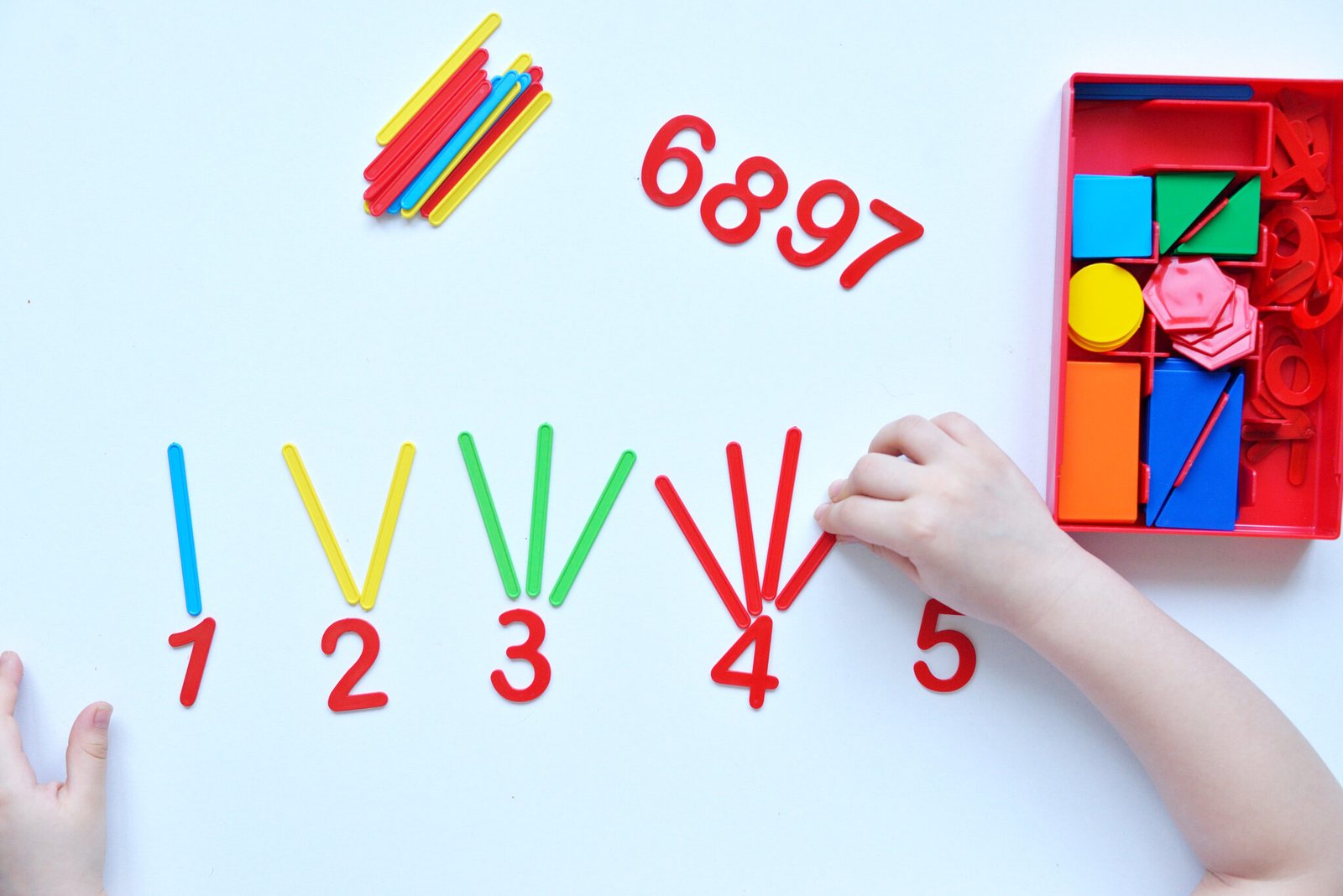
One-to-One Correspondence – Touching one object for each number word. This is HUGE. Many kids can recite “1, 2, 3, 4, 5” but when you ask them to count real objects, they skip some or count the same one twice. Master this skill and everything else becomes easier.
Cardinality – Understanding that the last number you say tells you “how many” there are total. When you count 5 blocks, the “5” means there are five blocks—not just that you counted them. This concept usually clicks around age 4.
Number Recognition – Recognizing written numerals (1, 2, 3…). Most 3-year-olds learn to recognize 1-5. By age 4, many recognize 1-10.
Quantity Comparison – Understanding more, less, and same. “You have 3 crackers. I have 5 crackers. Who has more?” This builds mathematical thinking.
Sorting & Classifying – Grouping objects by attributes (color, size, shape). This teaches them to analyze and categorize—critical thinking skills that underpin all future math.
Pattern Recognition – Identifying and creating simple patterns (red-blue-red-blue). Patterns are everywhere in math. Starting young builds algebraic thinking.
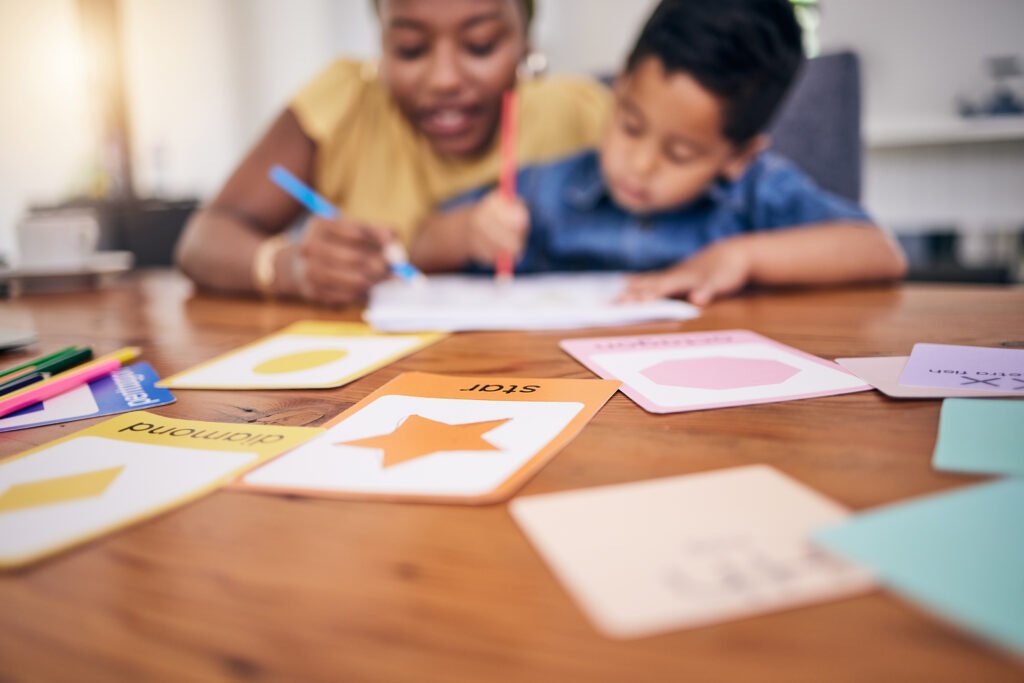
Shape Recognition – Identifying circle, square, triangle, rectangle. By age 4, many kids also recognize oval, diamond, heart, star.
Spatial Concepts – Understanding positional words: in, out, on, under, next to, behind, between. This vocabulary is essential for geometry later.
Measurement Concepts – Comparing lengths (longer/shorter), weights (heavier/lighter), volumes (more/less). This is early measurement!
Here’s what 3-4 year olds DON’T need:
- Addition and subtraction
- Writing numbers perfectly
- Memorizing math facts
- Workbooks or timed drills
Keep it playful, concrete, and hands-on. You’re building the foundation that all future math rests on.
The Secret to Teaching Preschool Math (Make It Real)
The absolute best way to teach math to preschoolers is to weave it into everyday life. Don’t schedule “math time” and pull out worksheets. Instead, make math conversations part of your daily rhythm.

Math in Daily Routines
Morning Routine Math:
- “Let’s count the stairs as we go down—1, 2, 3…”
- “You need 2 socks. Can you get 2 socks from your drawer?”
- “Which shirt is longer—the red one or the blue one?”
Meal Time Math:
- “Let’s set the table. We need 4 plates. Can you count them as you put them out?”
- “You have 6 grapes. If you eat 2, how many will be left?” (Don’t expect them to answer—just model math thinking)
- “Who has more milk—you or your brother?”
Play Time Math:
- “How many blocks did you use for your tower? Let’s count!”
- “Can you sort your cars by color?”
- “Let’s make a pattern with your bears—red, blue, red, blue…”
Bath Time Math:
- “Which cup holds more water?”
- “How many toys are in the bath? Let’s count them!”
- “Can you pour the water from the big cup to the small cup?”
Bedtime Math:
- “Let’s count how many books we’re reading tonight.”
- “Which stuffed animal is the biggest? Which is smallest?”
See how natural this is? You’re not teaching math—you’re living it together. This approach builds number sense far better than any worksheet.
30+ Hands-On Math Activities for Ages 3-4
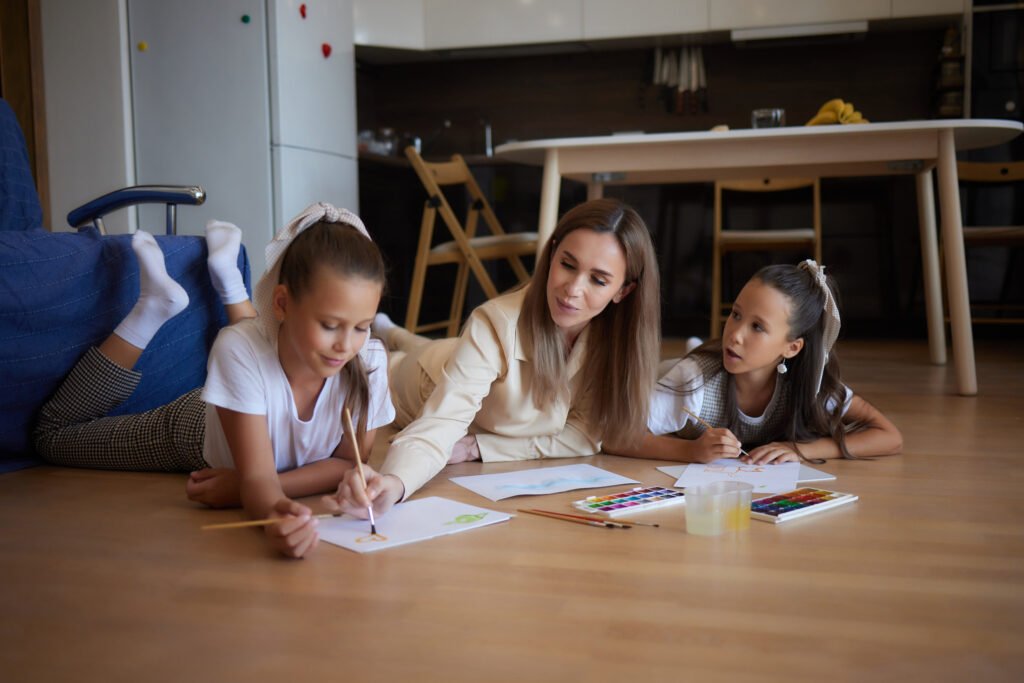
These activities use materials you already have at home. They’re organized from simplest to more complex—start where your child is ready.
Counting & One-to-One Correspondence Activities
- Snack Time Counting Give your child 10 crackers, raisins, or berries. Say: “Let’s count your snack together!” Touch each one as you count. Then ask: “How many do you have?” (This teaches cardinality.)
- Stair Counting Every time you use stairs, count them together. Touch each stair or stomp on it as you count. Consistency builds the skill.
- Counting Collections Give your child a collection of items (10 toy cars, blocks, or stuffed animals). Say: “Can you count how many you have?” Watch if they touch one item per count. If they skip or double-count, gently show them how.
- Playdough Balls Roll playdough into small balls together. Count as you make each one. Then count the total. This combines counting, fine motor practice, and fun.
- Nature Counting Walk Go outside with a small bag. Say: “Let’s find 5 rocks!” Count each rock as you add it to the bag. Try other collections: pinecones, leaves, sticks.
- Counting Books Read counting books together:
- “Ten Black Dots” by Donald Crews
- “1, 2, 3 to the Zoo” by Eric Carle
- “Five Little Monkeys” (and act it out!)
Touch each object on the page as you count together.
- Toy Lineup Line up toys and count them. Then remove one and count again. Add one back and count again. This shows how quantities change—early addition/subtraction thinking!
- Jumping Jacks Counting Do jumping jacks (or claps, or hops) together while counting. “1, 2, 3, 4, 5!” This connects numbers to physical movement.
Number Recognition Activities
- Number Hunt Write numbers 1-10 on sticky notes. Hide them around a room. Have your child find them and bring them to you. Say: “You found the 3! Great job!”
- Sensory Number Writing Fill a tray with salt, sand, or shaving cream. Write numbers 1-5 and have your child trace them with their finger. The sensory input strengthens memory.
- Number Dot Matching Create cards with numerals (1, 2, 3…) and separate cards with corresponding dots. Have your child match the numeral to the correct number of dots.
- Number Parking Lot Write numbers 1-10 on the ground with sidewalk chalk. Call out a number and have your child drive a toy car to “park” on that number.
- Playdough Numbers Roll playdough into “snakes” and form numbers together. Say the number name as you build it. Let them squish and rebuild.
- Magnetic Numbers on the Fridge Keep magnetic numbers accessible. Say a number and have them find it. Or put numbers in order together. Keep it playful, not drill-like.
Sorting & Classification Activities
- Color Sorting Give your child a mixed pile of objects (blocks, toys, crayons). Provide bowls or plates. Say: “Can you put all the red ones here and all the blue ones here?”
- Size Sorting Collect objects of different sizes (big spoons and small spoons, big rocks and little rocks). Sort into “big” and “small” piles.
- Shape Sorting Use blocks or shape toys. Sort by shape: all circles together, all squares together.
- Laundry Sorting Real-life math! Sort socks by color or size. Match sock pairs. This is practical AND educational.
- Toy Cleanup Sorting Make cleanup time a sorting game. “Let’s put all the cars in this bin and all the blocks in that bin!”
Pattern Recognition Activities
- Pattern Blocks Create simple AB patterns: red block, blue block, red block, blue block. Ask: “What comes next?” Let your child continue the pattern.
- Snack Patterns Use two types of snacks (raisins and cheerios, crackers and pretzels). Create an AB pattern on a plate. Eat the pattern together!
- Movement Patterns Create patterns with actions: clap, stomp, clap, stomp. Have your child join you and predict what comes next.
- Bead Stringing Patterns String beads (or pasta, or cereal) onto yarn in patterns. Red, blue, red, blue.
- Pattern Dance Dance in patterns: two steps forward, one spin, two steps forward, one spin. Make it silly!
Shape Activities
- Shape Hunt Go on a shape hunt around your home. “Can you find something that’s a circle? A square?” Take photos or draw what you find.
- Shape Building Use building blocks or magnetic tiles to build structures. Talk about the shapes you’re using: “You used three triangles and two squares!”
- Shape Printing Cut sponges into shapes or use shape cookie cutters. Dip in paint and print onto paper. Count how many of each shape you made.
- Shape Puzzles Simple shape puzzles where your child fits shapes into corresponding holes build shape recognition and fine motor skills.
Measurement & Comparison Activities
- Comparing Lengths Line up toys, blocks, or crayons. Ask: “Which one is longer? Which is shorter?” Use positional language.
- Water Play Measurement Provide containers of different sizes during bath or water play. “Which cup holds more water? Let’s find out!”
- Building Towers Build block towers. Compare heights. “My tower is taller! Your tower is shorter. Can you make yours taller than mine?”
- Weight Comparison Hold two objects (a book and a toy, a rock and a feather). “Which one is heavier? Which is lighter?” Let your child hold them and guess.
Games That Build Math Skills
- Dice Games Roll a large die (or make one from a box). Count the dots together. Collect that many small toys.
- Board Games Simple board games for preschoolers teach counting, taking turns, and following rules:
- Chutes and Ladders
- Candyland (color recognition, turn-taking)
- Hi Ho Cherry-O (counting, addition/subtraction concepts)
- Card Games Play simple card games with number cards. Match numbers. Compare which number is bigger.
- “More or Less” Game Show two groups of objects (3 blocks vs. 5 blocks). Ask: “Which group has more?” This builds quantity comparison skills.
Common Preschool Math Mistakes to Avoid
Mistake #1: Focusing on Rote Counting Instead of Real Counting Your child can recite “1, 2, 3, 4, 5” perfectly but struggles to count real objects. That’s because reciting is memorization, while counting objects requires one-to-one correspondence and cardinality understanding. Always practice with real, touchable objects.
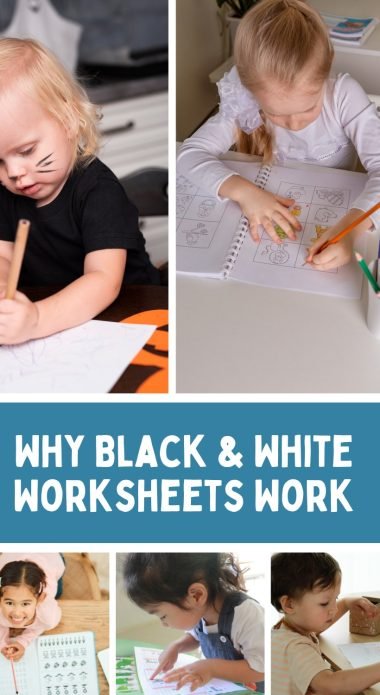
Mistake #2: Moving Too Fast to Worksheets Preschoolers learn through hands-on manipulation. Worksheets are abstract—they’re not developmentally appropriate for most 3-4 year olds. Save paper-and-pencil work for kindergarten.
Mistake #3: Not Using Math Vocabulary Don’t just count—talk about math! Use words like “more,” “less,” “equal,” “bigger,” “smaller,” “first,” “last,” “before,” “after.” The vocabulary builds mathematical thinking.
Mistake #4: Comparing Your Child to Others Your friend’s 3-year-old can count to 50? That’s great for them. Your child is learning at their own pace. Comparison creates anxiety and pressure—two things that kill a love of learning.
Mistake #5: Teaching Numbers Out of Context Don’t just drill number recognition in isolation. Always connect numbers to quantities: “This is the number 3. Let’s find 3 blocks!”
How to Know If Your Child Is Progressing
Typical math milestones for ages 3-4:
Age 3:
- Counts to 10 (may skip numbers)
- Counts 3-5 objects with one-to-one correspondence
- Recognizes numerals 1-3
- Sorts objects by one attribute (color OR size)
- Identifies circle, square, maybe triangle
- Understands “more” and “less” in concrete situations
Age 4:
- Counts to 20
- Counts 10 objects accurately with one-to-one correspondence
- Recognizes numerals 1-10
- Understands cardinality (last number = total)
- Sorts by multiple attributes (color AND size)
- Creates simple patterns
- Identifies basic shapes: circle, square, triangle, rectangle
- Uses comparison language: bigger, smaller, more, less
Red flags to watch for:
- No interest in counting by age 4
- Can’t count 5 objects accurately by age 4.5
- No understanding of “more” vs. “less” by age 4.5
If concerned, talk to your pediatrician. Early intervention makes a difference.
Get Free Learning Activities!
Join thousands of parents and teachers who receive our best activities, tips, and printables every week. Plus, get instant access to our exclusive resource library!
No spam, ever. Unsubscribe anytime.
Free Printable Math Resources for Ages 3-4
What’s included in our free math printables pack:
- Counting cards (1-10 with pictures)
- Number tracing pages
- Sorting mats (color, size, shape)
- Pattern cards
- Shape matching games
- More/Less comparison activities
Frequently Asked Questions About Preschool Math
Should my 3-year-old be doing math worksheets? No. Worksheets are too abstract for most 3-year-olds. Hands-on activities with real objects are far more effective for building number sense. Save worksheets for ages 4-5+, and even then, use sparingly.
My child can recite numbers to 20 but can’t count objects. Why? Reciting numbers is rote memorization—like singing a song. Counting objects requires understanding one-to-one correspondence and cardinality. Practice counting real objects daily and the skills will develop.
How do I teach number recognition? Through exposure and context. Point out numbers everywhere: house numbers, license plates, prices at stores, page numbers in books. Play games like number hunts. Connect numerals to quantities: “This is the number 4. Let’s find 4 toys!”
Is it okay if my child counts objects but points to random items (not in order)? Yes, that’s a typical stage! They’re learning that each object gets one count. With practice, they’ll develop more systematic counting (left to right, or organized in some way).
Should I correct my child when they skip numbers while counting? Gently model the correct sequence without making a big deal. “Let’s count together—1, 2, 3, 4, 5.” Don’t interrupt their play to correct. Math should feel joyful, not stressful.
My 4-year-old still can’t write numbers. Should I be worried? Not at all. Number writing is a fine motor skill that develops slowly. Many kids can recognize and understand numbers long before they can write them. Keep offering opportunities to trace and write, but don’t pressure.
Conclusion: You’re Raising a Mathematician!
Every time you count stairs, sort laundry, or compare tower heights, you’re teaching math. You don’t need expensive manipulatives or fancy curriculum—you just need intention and consistency.
Remember:
- Math happens in everyday moments
- Hands-on beats worksheets every time
- Real objects before abstract symbols
- Make it playful, not pressure-filled
- Use math vocabulary constantly
- Celebrate small victories
Your preschooler is building mathematical thinking that will serve them for life.
Keep learning with these guides:
- Toddler Alphabet Workbook – Animal Sounds Habitats Dot Marker Tracing Fine Motor Ages 2-4
- Pre-K Kindergarten Animal Alphabet Workbook – Habitats Tracing Handwriting Dot Marker
- My Busy Book – Cut Match Activities for Preschool and Kindergarten
- Preschool Skills Assessment – Pre-K Portfolio Kindergarten Readiness
- Ultimate Homeschool Planner – Complete Learning Kit
Looking for monthly and seasonal preschool unit themes? We also offer monthly preschool and Pre-K curriculum units with ready-to-use lesson plans, printables, and activities for themes like Back to School, Thanksgiving, Christmas, Fall, Winter, Spring, Easter, and more.
👉 Explore our Monthly Preschool Curriculum Units ★
Want a full year of math activities planned for you? Our Complete Preschool Math Curriculum includes 36 weeks of hands-on activities, printables, and games, no worksheets required!