Description
Target Audience: Homeschool moms + Preschool teachers + Parents preparing kids for kindergarten
Primary Keyword: “pre-k literacy activities” (3,800 searches/mês)
Secondary Keywords: “teaching reading pre-k”, “letter sounds activities”, “pre-k writing activities”, “phonics for 4 year olds”
Meta Description (159 caracteres): “Pre-K literacy activities for ages 4-5. Letter sounds, phonics, early reading & writing activities. Kindergarten-ready literacy skills. Free printables!”
Your four-year-old is starting to notice that those squiggly marks on pages have meaning. They’re asking “What does that say?” and trying to write their own messages with a mix of scribbles and real letters. They’re on the edge of something amazing—learning to read.
This is the year when literacy explodes. When letters transform from random shapes into meaningful symbols. When sounds blend together into words. When writing evolves from scribbles to recognizable letters and eventually—thrillingly—their first written words.
But here’s what you need to know: Teaching literacy to 4-5 year olds doesn’t look like worksheets and drills. It looks like games, songs, stories, and hands-on exploration that builds genuine reading skills through engagement and joy.
Whether you’re a homeschool mom creating your Pre-K curriculum, a preschool teacher preparing students for kindergarten, or a parent wanting to support your child’s literacy journey, this guide gives you everything you need.
What you’ll discover:
- The progression from letters to reading (what comes when)
- Essential pre-reading skills for ages 4-5
- How to teach letter sounds effectively
- 50+ hands-on literacy activities (no-prep and low-prep!)
- Teaching writing without frustration
- When (and how) to introduce actual reading
- Signs your child is ready to read
- Best books for emerging readers
- Free printable literacy activities
Let’s build readers and writers who love learning!
The Pre-K Literacy Progression (From Letters to Reading)
Pre-K is the bridge between knowing “that’s a letter” and actually reading. Understanding this progression helps you teach the right skills at the right time.
The Pre-K Literacy Roadmap:
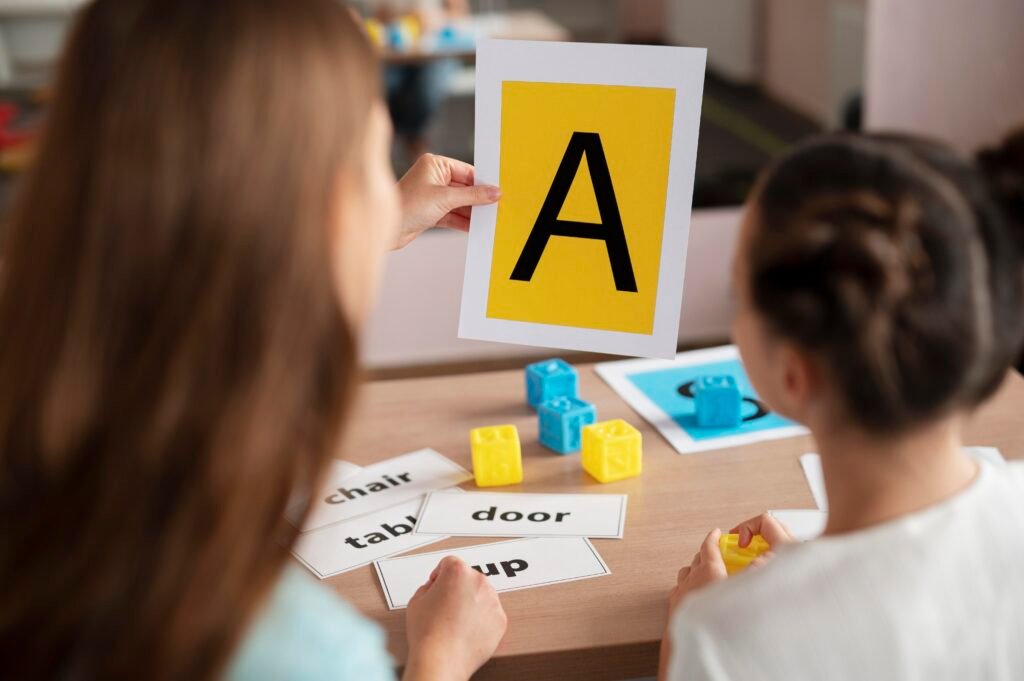
Stage 1: Letter Recognition Mastery (First Few Months)
What this means:
- Recognizes all 26 uppercase letters
- Recognizes most lowercase letters
- Matches uppercase to lowercase
- Identifies letters out of order (not just in ABC sequence)
What this looks like: “Can you find the letter M? Show me capital M. Now show me lowercase m.”
How long this takes: Most 4-year-olds entering Pre-K know 10-15 letters. By mid-year, they should know all letters. By end of Pre-K, recognition should be automatic.
Activities that build this:
- Alphabet songs and games
- Letter hunts in books and environment
- Matching games
- Letter puzzles
- Daily alphabet review
Stage 2: Letter-Sound Correspondence (Phonics Foundation)
What this means:
- Connects letters to their sounds
- Knows that B says /b/ (not “buh”—just the pure sound)
- Can tell you what sound a letter makes
- Can identify words that start with a specific sound
What this looks like: You show the letter S. Child says “/s/ like snake!” You say “/m/.” Child finds the letter M.
How long this takes: This is ongoing throughout Pre-K year. Start with consonants (easier), then vowels (harder).
Critical: Teach the SOUND, not the name + “uh”.
- Wrong: “B says buh”
- Right: “B says /b/” (quick, crisp sound)
Activities that build this:
- Letter sound songs and chants
- Beginning sound games (“I spy something that starts with /t/”)
- Sound sorting activities
- Multisensory letter learning
Stage 3: Phonological Awareness (Playing with Sounds)
What this means: The ability to hear and manipulate sounds in words—this is THE predictor of reading success.
Skills in this stage:
- Rhyming: Recognizes and produces rhymes (cat/hat, dog/frog)
- Syllables: Claps syllables in words (di-no-saur = 3 claps)
- Beginning sounds: Identifies first sound in words (“Cat starts with /c/”)
- Ending sounds: Identifies last sound (emerging skill—harder!)
- Sound blending: Puts sounds together (/c/ /a/ /t/ = cat!)
- Sound segmenting: Breaks words into sounds (cat = /c/ /a/ /t/)
What this looks like: “What rhymes with dog? Frog! Log!” “Let’s clap the sounds in your name: Sa-man-tha (3 claps)” “/c/ /a/ /t/… what word is that? Cat!”
How long this takes: This develops throughout Pre-K and continues into kindergarten. Blending and segmenting are advanced skills that emerge toward end of Pre-K.
Activities that build this:
- Rhyming books and games
- Syllable activities
- Sound manipulation games
- Oral blending practice (no reading yet—just listening!)
Stage 4: Sight Word Recognition (High-Frequency Words)
What this means: Recognizing common words instantly, without sounding out.
Pre-K sight words (10-15 words by end of year): I, a, the, see, we, can, go, to, my, you, like, me, he, she, it
What this looks like: Child sees “I” and immediately says “I” without thinking.
Why this matters: Many common words aren’t phonetically regular (the, said, was). Learning them by sight helps children read simple sentences earlier.
How long this takes: Introduce gradually starting mid-year. By end of Pre-K, knowing 10-15 sight words is excellent.
Activities that build this:
- Sight word games
- Daily exposure
- Reading simple books with repeated sight words
- Flashcards (used playfully, not drilled!)
Stage 5: Early Reading (Emerging Skill)
What this means: Blending letter sounds to read simple CVC words (consonant-vowel-consonant: cat, dog, sun).
What this looks like: Child sees “cat” Thinks: “/c/ /a/ /t/… cat!” Says: “Cat!”
Realistic expectations:
- Some 4-year-olds begin reading simple words by end of Pre-K
- Many 5-year-olds are just beginning
- Most children learn to read during kindergarten and 1st grade
- ALL of these timelines are normal
Don’t push reading if your child isn’t ready! Forced early reading can backfire, creating resistance and anxiety.
How to know if they’re ready: ✅ Knows all letters and most sounds
✅ Can blend orally (/c/ /a/ /t/ = cat)
✅ Shows interest in reading
✅ Attempts to sound out words independently
If yes → provide beginning readers and support
If no → keep building foundation skills without pressure
Activities that build this:
- Decodable readers (Bob Books, Reading Eggs)
- CVC word building with magnetic letters
- Simple reading games
- Shared reading with support
Essential Pre-K Literacy Skills (The Foundation)
Before children can read, they need these critical pre-reading skills. This is where you invest most of your time and energy at ages 4-5.
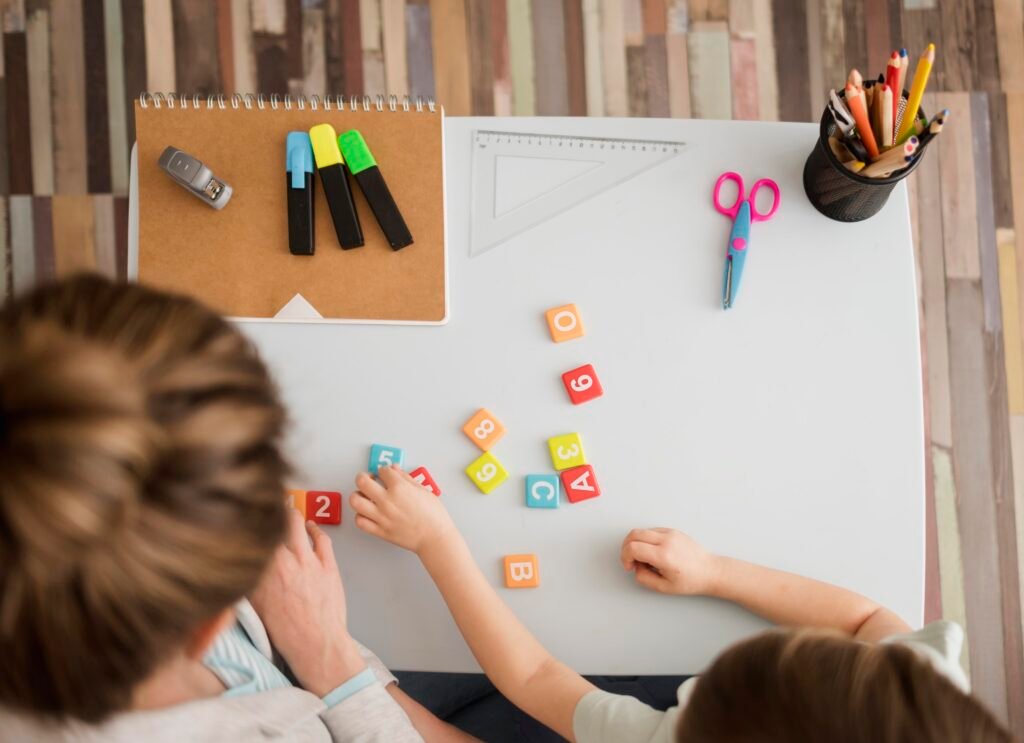
Print Concepts & Book Handling
What children need to understand:
- Print carries meaning (those marks say something!)
- Books have covers, titles, authors
- We read from left to right, top to bottom
- Words are made of letters
- Spaces separate words
- Sentences start with capital letters and end with punctuation
How to teach this:
- Point to words while reading (occasionally—don’t do this every time or it disrupts flow)
- Talk about book parts: “This is the title. This is who wrote the book.”
- Model directionality: “We start here (top left) and read this way (sweep left to right)”
- When child “writes,” discuss: “This is a word. This is another word. We put spaces between words.”
Activities:
- Shared reading with explicit modeling
- “Find the title” game
- “Where do we start reading?” practice
- Making books together
Oral Language & Vocabulary
Why this matters: You can’t read words you don’t know! Strong vocabulary and language skills are the foundation of reading comprehension.
What children need:
- Rich vocabulary (2,000-3,000 words by age 5)
- Complex sentence structures
- Ability to follow and tell stories
- Understanding of descriptive language
How to build this:
- Read aloud daily (the #1 vocabulary builder!)
- Engage in rich conversations
- Introduce new words naturally
- Ask open-ended questions
- Tell and retell stories together
Activities:
- Daily read-alouds with discussion
- “Tell me about…” conversations
- Storytelling with puppets or props
- Word of the day activities
Phonological Awareness (The Secret Superpower)
Why this is critical: Phonological awareness is the STRONGEST predictor of reading success. Children who can hear, identify, and manipulate sounds in words become strong readers.
Pre-K Phonological Awareness Skills:
Rhyming (Early Skill):
- Recognizes rhymes: “Do cat and hat rhyme?”
- Produces rhymes: “What rhymes with dog?”
Syllable Awareness:
- Claps syllables in words
- Counts syllables
- Identifies which word is longer
Beginning Sounds (Phoneme Awareness Starts):
- Identifies beginning sounds: “What’s the first sound in sun?”
- Sorts objects/pictures by beginning sound
- Generates words with a specific beginning sound
Ending Sounds (Emerging):
- Identifies ending sounds (harder than beginning!)
- “What’s the last sound in cat?”
Sound Blending (Advanced):
- Puts sounds together: “/c/ /a/ /t/ = cat”
- Starts orally (listening), progresses to reading
Sound Segmenting (Advanced):
- Breaks words into sounds: “Cat = /c/ /a/ /t/”
- Very challenging for Pre-K—emerging skill
How to teach this:
- Daily phonological awareness activities (5-10 minutes)
- Playful, oral games (no reading required!)
- Songs, rhymes, chants
- Hands-on sound activities
Teaching Letter Sounds Effectively (Beyond the Alphabet Song)
Knowing the alphabet song is NOT the same as knowing letter sounds. Here’s how to teach sounds that stick.
The Right Order for Teaching Sounds
Don’t teach alphabetically (A, B, C…). Teach strategically:
Start with these high-value letters: S, A, T, P, I, N
Why? These letters are:
- Common in simple words
- Easy to write
- Build words quickly (sat, pat, tap, pit, nap, etc.)
Next, teach: C, K, E, H, R
Then: M, D, G, O
Finally: F, L, U, B, J, V, W, X, Y, Z, Q
Vowels are HARD. Teach them explicitly and repeatedly. Most Pre-K children struggle with vowel sounds—that’s normal!
How to Introduce Each Letter Sound
The Multisensory Approach (Works Best!):
- Visual (See it): Show the letter. “This is the letter S.”
- Auditory (Hear it): Say the sound clearly. “/s/ /s/ /s/ like snake!”
- Kinesthetic (Move it): Make a motion or action connected to the sound.
- S = slither like a snake
- M = rub belly saying “mmmmm”
- T = pretend to hit a tennis ball “t-t-t”
- Tactile (Touch it): Form the letter with different materials:
- Playdough
- Sand tray
- Shaving cream
- Wikki Stix
- Rainbow writing
- Practice (Use it):
- Find objects starting with that sound
- Play I Spy with the sound
- Sort pictures by sound
- Build the letter while saying the sound
Example Lesson: Teaching the Letter M
“This is the letter M. M says /m/ /m/ /m/ like when you eat something yummy—mmmmm! Let’s all say /m/!”
[Kids say /m/]
“Let’s rub our bellies and say /m/! What else starts with /m/? Mom! Mouse! Money! Milk!”
“Now let’s make the letter M with playdough while we say /m/ /m/ /m/.”
[Children form M with playdough]
“Let’s find things in the room that start with /m/!”
[Sound hunt activity]
Total time: 10-15 minutes. Engaging, multisensory, effective.
Common Mistakes When Teaching Letter Sounds
Mistake #1: Teaching the letter name + “uh” Wrong: “B says buh” Right: “B says /b/” (quick, crisp)
Adding “uh” makes blending impossible. /b/ /u/ /h/ ≠ /b/
Mistake #2: Teaching too many sounds at once Introduce 1-2 letters per week maximum. Children need time to practice and internalize.
Mistake #3: Only teaching through worksheets Worksheets are passive. Use multisensory, active learning for better retention.
Mistake #4: Not connecting sounds to real words Always link sounds to meaningful words children know. “B says /b/ like ball, bear, baby!”
Mistake #5: Expecting mastery too quickly Learning 26 letter sounds takes TIME. Be patient. Some children master them by end of Pre-K; others during kindergarten. Both are normal.
50+ Pre-K Literacy Activities (Hands-On & Engaging!)
These activities build Pre-K literacy skills through play and exploration. Most require minimal prep!
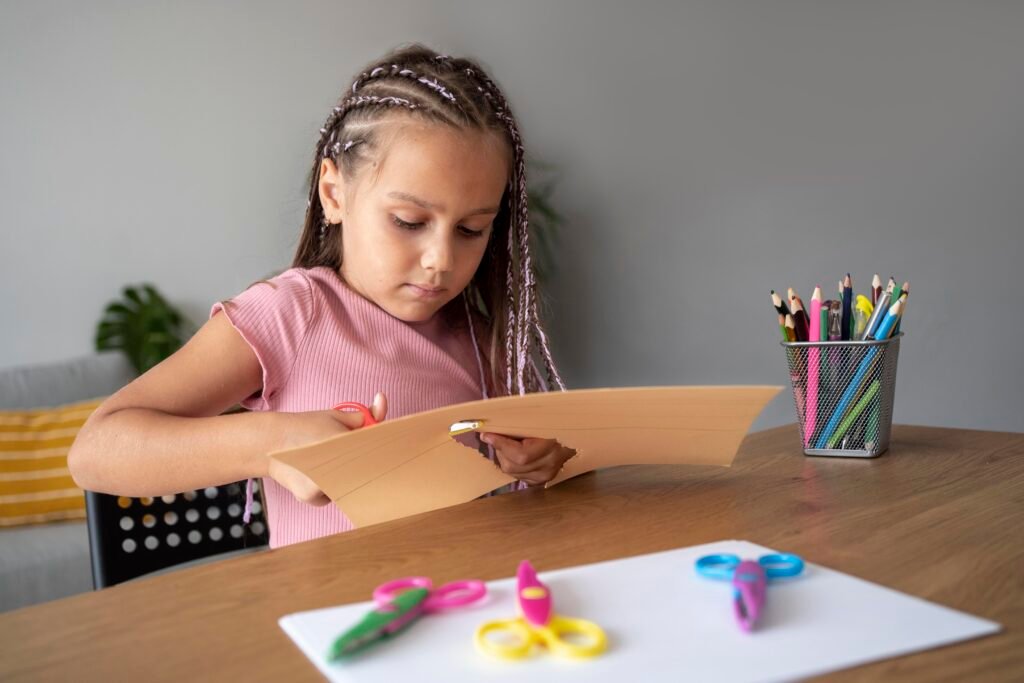
Letter Recognition Activities
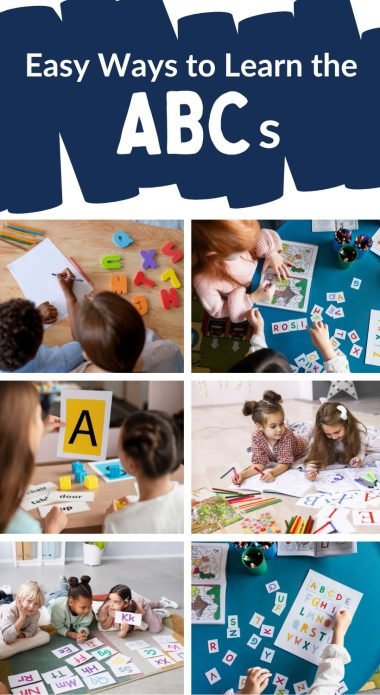
- Alphabet Scavenger Hunt Hide magnetic letters around the room. Call out a letter, child finds it. Or: child finds all letters in their name.
- Letter Matching Game Create pairs of matching letters (uppercase/lowercase). Play memory or matching game.
- Alphabet Parking Lot Write letters on ground with chalk. Call out a letter, child drives toy car to park on that letter.
- Letter Bingo Create simple bingo cards with letters. Call out letters, children mark them. First to complete a row wins!
- Play-Doh Letters Roll playdough into “snakes” and form letters. Say letter name and sound while building.
- Sensory Letter Writing Fill tray with salt, sand, or shaving cream. Write letters with finger. Tactile + visual learning!
- Rainbow Letters Write large letter in pencil. Child traces over it multiple times with different colored crayons, creating rainbow effect.
- Letter Collage Choose a letter. Cut/tear magazine pictures starting with that letter. Glue onto paper shaped like the letter.
- Alphabet Puzzles Simple puzzles where children match letter pieces. Builds recognition and fine motor skills.
- Letter Stamping Use alphabet stamps and ink pad. Stamp letters, say their names, practice recognition.
Letter Sound Activities
- Beginning Sound Sort Provide pictures or objects. Sort by beginning sound. “All the /b/ things go here!”
- Sound Scavenger Hunt “Find 5 things in this room that start with /t/!” Take photos or make a list.
- I Spy with Sounds “I spy something that starts with /m/… mat!”
- Sound Baskets Create baskets for different sounds. Throughout the week, add objects starting with each sound.
- Letter Sound Hopscotch Write letters on hopscotch squares. Child hops on letter and says the sound.
- Sound of the Day Choose one sound. Throughout the day, notice everything starting with that sound. Make it fun and silly!
- Beginning Sound Matching Match letter cards to picture cards with same beginning sound. S matches snake, sun, sandwich.
- Playdough + Objects Make a letter with playdough (ex: P). Find small objects starting with /p/ (penny, paperclip, pom-pom). Press into the playdough.
- Sound Songs Make up silly songs using lots of words with same beginning sound. “Sally the snake slithers slowly through the sand!”
- Letter Sound Dice Game Roll a die with letters on each side. Say the sound, find an object starting with that sound.
Phonological Awareness Activities
- Rhyming Memory Game Create pairs of rhyming pictures. Play memory—match rhymes!
- Rhyme Time Read rhyming books (Dr. Seuss!). Pause before rhyming word—can child predict it?
- Silly Rhyme Stories Create silly stories together using lots of rhymes. “The cat in the hat sat on a mat and ate a rat!” (Gross but memorable!)
- Syllable Clapping Clap syllables in names, foods, animals, anything! “Di-no-saur!” (3 claps)
- Syllable Sorting Sort picture cards by number of syllables. One clap pile, two clap pile, three clap pile.
- Syllable Jump Say a word. Jump for each syllable. “Elephant!” (3 jumps)
- Sound Boxes (Elkonin Boxes) Draw 3 boxes. Say a word (cat). Move a counter into each box for each sound: /c/ /a/ /t/. This is advanced!
- Sound Blending Game You say sounds slowly: “/d/ /o/ /g/” Child blends: “Dog!” Start with 2-sound words (up, it, go), progress to 3-sound words.
- Beginning Sound Swap Say a word. Change the beginning sound. “Cat. Change /c/ to /b/. Bat!”
- Rhyme Basket Put several objects in basket. Find two that rhyme. Can they find them all?
Sight Word Activities
- Sight Word Hunt Hide sight word cards around room. Find them, read them, collect them!
- Sight Word Bingo Make bingo cards with 9 sight words. Call out words, children cover them. Easy and fun!
- Sight Word Memory Create pairs of matching sight words. Play memory game.
- Rainbow Sight Words Write sight word in pencil. Trace over it with different colors. Visual memory strengthening!
- Sight Word Sentences Use sight word cards to build simple sentences. “I see a cat.” Child arranges cards, reads sentence.
- Sight Word Swat Spread sight word cards on table or floor. Call out a word. Child uses fly swatter to “swat” the correct word. Fast-paced and active!
- Playdough Sight Words Build sight words with playdough “snakes.” Tactile learning!
- Sight Word Parking Write sight words on toy cars. Create parking spaces with matching words. Match and park!
Writing Activities
- Name Writing Practice Daily name writing—on paper, in sand tray, with chalk, with markers. Repetition builds muscle memory.
- Letter Formation Practice Teach proper letter formation (starting points, direction). Use multisensory methods—not just worksheets!
- Sand Tray Writing Fill shallow tray with sand, salt, or rice. Write letters and words with finger.
- Vertical Surface Writing Tape paper to wall or use easel. Vertical surfaces strengthen wrist position—easier than horizontal!
- Water Writing Use paintbrush and water to “write” letters on sidewalk or chalkboard. Mess-free and fun!
- Salt Tray Letters Fill tray with colored salt. Write letters. Shake to erase. Repeat!
- Wikki Stix Letters Use Wikki Stix (waxy strings) to form letters. Tactile and fun!
- Letter Hunt & Write Find a letter in a book or magazine. Copy it onto your paper. Builds observation and writing.
- Message Board Create a message board. Child writes messages (scribbles, letters, invented spelling). Reply with your own messages!
- Drawing & Labeling Child draws picture. Help them label parts. “What’s this? A house. Let’s write ‘house’!” Even if they only write H—that counts!
Reading Activities
- Shared Reading Read together. Child points to words or “reads” familiar parts. Builds confidence!
- Echo Reading You read a sentence. Child repeats it. Builds fluency and expression.
- CVC Word Building Use magnetic letters. Build simple 3-letter words: cat, dog, sun, mat. Sound them out together.
- Decodable Readers Books designed for early readers with simple, decodable words. Bob Books, I Can Read Level 1.
- Predictable Books Books with repetitive text. “Brown bear, brown bear, what do you see?” Child “reads” the repeated parts.
- Environmental Print Reading Read signs, labels, logos together. “That says STOP. That says Target!”
Get Free Learning Activities!
Join thousands of parents and teachers who receive our best activities, tips, and printables every week. Plus, get instant access to our exclusive resource library!
No spam, ever. Unsubscribe anytime.
Teaching Writing to Pre-K Children (Without Tears!)
Writing is HARD for 4-5 year olds. Their hands are still developing fine motor control. Be patient and make it multisensory.
Pre-Writing Skills (Foundation for Writing)
Before formal writing, children need:
- Hand strength (playdough, squeezing, pinching)
- Finger dexterity (manipulating small objects)
- Pencil grip (tripod grasp developing)
- Hand-eye coordination (puzzles, threading beads)
- Visual-motor integration (copying shapes)
Pre-Writing Activities:
- Daily playdough
- Cutting with scissors
- Stringing beads
- Coloring and drawing
- Tracing shapes and lines
Don’t skip these! Strong hands = easier writing.
The Progression of Writing Skills
Ages 4-5 Writing Development:
Beginning of Pre-K:
- Scribbles with some letter-like shapes
- Can copy circle, cross, maybe square
- Writes name with support (letters may be backwards/random)
- Uses whole-hand grip or emerging tripod grip
Middle of Pre-K:
- Recognizable letters appearing
- Copies letters when shown
- Writes first name (may still reverse some letters)
- Tripod grip emerging
- Beginning to write some letters from memory
End of Pre-K:
- Writes first name independently and legibly
- Writes many letters from memory
- Attempts to spell simple words (inventive spelling!)
- Tripod grip more consistent
- May write simple words or short sentences with support
Kindergarten Ready:
- Writes first name confidently
- Writes some letters and numbers
- Attempts to write messages (inventive spelling is fine!)
- Holds pencil with mature grip
Teaching Letter Formation (The Right Way)
Start at the top! Most letters start at the top and move down/across.
Teach formation explicitly: Use verbal cues and hand-over-hand guidance.
Example: Letter B “Start at the top. Pull down. Go back to the top. Around and bump the line. Around again and bump the bottom.”
Practice formation in multiple ways:
- Air writing (big movements)
- Sand tray
- Playdough
- Paint
- Markers on paper
- Pencil (last—hardest!)
Common reversal letters (normal at this age!): b/d, p/q, s, z, 3, 5, 7
Don’t over-correct. Gently model correct formation. Most reversals resolve by age 7-8.
Encouraging Emergent Writing
Inventive Spelling = GREAT!
When your child writes “KT” for “cat” or “LUV” for “love”—CELEBRATE! They’re applying phonics knowledge!
Don’t correct spelling in Pre-K. Focus on:
- Encouraging attempts
- Celebrating effort
- Modeling correct spelling without criticizing theirs
Create a writing-rich environment:
- Writing center with various materials
- Message board for back-and-forth notes
- Encourage drawing and labeling
- “Write” grocery lists, birthday cards, letters together
The goal at Pre-K: Comfort with writing tools, attempting to write, using letters to communicate—NOT perfect spelling or handwriting!
When Should My Child Start Reading? (Signs of Readiness)
This is the #1 question parents ask. The answer: when they’re ready—not before, not on a schedule.
Signs Your Child Is Ready to Read
✅ Knows all or most letters and sounds
✅ Can blend sounds orally (/c/ /a/ /t/ = cat)
✅ Shows interest in reading (asks “what does that say?”)
✅ Attempts to sound out words independently
✅ Recognizes some sight words
✅ Has strong phonological awareness (rhymes, segments sounds)
✅ Can focus on a task for 10-15 minutes
If your child shows these signs → introduce simple readers and support their reading journey!
What If They’re NOT Ready?
Most 4-5 year olds aren’t ready to read yet—and that’s NORMAL.
Reading typically develops:
- Late kindergarten / early 1st grade for most children
- Earlier for some (pre-K)
- Later for others (mid 1st grade)
All of these timelines are developmentally normal.
Don’t push reading before readiness! This can:
- Create anxiety and resistance
- Damage self-confidence
- Kill love of reading
- Actually delay reading development
Instead, focus on:
- Building strong pre-reading skills
- Reading aloud daily
- Making literacy joyful
- Following their lead
Trust the process. When foundation skills are strong, reading clicks naturally.
Best Books for Emergent Readers
If your child IS ready to start reading:
Decodable Readers (Phonics-Based):
- Bob Books (Set 1: Beginning Readers)
- Reading Eggs books
- I See Sam series
- Starfall Learn to Read books
These use simple, decodable words (cat, dog, run) so children can practice sounding out.
Predictable Readers (Pattern-Based):
- Brown Bear, Brown Bear, What Do You See?
- I Can Read Level 1 books
- Scholastic Sight Word Readers
These have repetitive text so children can “read” through memory and context clues.
Important: Match books to child’s level. Too hard = frustration. Just right = confidence!
Common Pre-K Literacy Challenges & Solutions
Challenge: “My child knows letters but not sounds.”
Solution: This is common! Letter names are easier than sounds. Focus on:
- Multisensory sound teaching
- Connecting sounds to meaningful words
- Daily phonics practice (5-10 min)
- Games and songs, not just worksheets
Challenge: “They mix up b and d constantly.”
Solution: Completely normal! These are mirror images—very confusing for young brains.
- Don’t over-correct
- Gently model correct formation
- Use multisensory tricks (“b has a belly,” “d has a dog’s tail going back”)
- Most children resolve this by ages 7-8
Challenge: “My child won’t write—they say ‘I can’t!'”
Solution: Writing is hard! Build confidence:
- Start with easier methods (tracing, sand tray, paint)
- Shorten writing time (5 minutes max)
- Focus on FUN activities, not perfection
- Celebrate attempts, not outcomes
- Build hand strength through play first
Challenge: “They’re ready to read but I don’t know how to teach it.”
Solution:
- Use decodable readers (Bob Books are perfect!)
- Practice CVC words (cat, dog, sun)
- Sound out words together
- Celebrate every success
- Don’t worry about teaching formally—follow their lead!
Challenge: “Other kids are reading—mine isn’t. Should I worry?”
Solution: Reading development varies WIDELY. Some 4-year-olds read fluently; some 6-year-olds are just starting. Both are normal!
- Focus on your child’s progress, not comparisons
- Keep building foundation skills
- Read aloud daily
- If by age 6-7 there’s still no progress, talk to pediatrician

H2: Free Printable Pre-K Literacy Resources
What’s included in our free Pre-K literacy pack:
- Alphabet tracing pages (upper and lowercase)
- Letter sound matching cards
- Beginning sound sorting mats
- CVC word building cards
- Sight word flashcards (20 words)
- Rhyming picture cards
- Writing practice sheets
- Name writing template
Frequently Asked Questions About Pre-K Literacy
Should my 4-year-old be reading before kindergarten? Most 4-5 year olds are NOT reading before kindergarten—that’s completely normal. Pre-K should focus on pre-reading skills (letters, sounds, phonological awareness). Reading typically develops during kindergarten and 1st grade. If your child IS reading early, that’s wonderful—but it’s not expected or required.
How many letters should my child know by age 5? By the end of Pre-K (age 5), most children know all 26 letters (uppercase) and most lowercase letters. But letter SOUNDS matter more than letter names! Knowing 15-20 letter sounds by kindergarten entry is excellent.
My child writes letters backwards. Is this a problem? Not at ages 4-5! Letter reversals (b/d, p/q, s, 3, 5) are completely normal. Young brains are still developing the ability to distinguish mirror images. Most children resolve reversals by ages 7-8. Gently model correct formation but don’t over-correct or stress.
What’s the difference between phonics and phonological awareness? Phonological awareness is HEARING sounds (oral, no letters needed). “What rhymes with cat? What’s the first sound in dog?” Phonics connects those sounds to LETTERS. “The letter C says /c/. Let’s read ‘cat.'” Both are critical for reading!
Should I use flashcards to teach letters and sight words? Flashcards can be ONE tool, but shouldn’t be your primary method. Use them playfully (games, not drills). Combine with multisensory activities, songs, games, and hands-on learning for best results.
When should I start teaching my child to read? When they’re ready! Look for signs: knows letters/sounds, can blend sounds orally, shows interest, attempts to sound out words. This might happen at 4, 5, or 6—all are normal. Don’t push before readiness!
My child knows letters and sounds but can’t blend them to read. Why? Blending is a complex skill! Practice orally first (without letters): “Listen: /c/ /a/ /t/. What word?” Once they can blend sounds they HEAR, blending sounds they SEE becomes easier. Be patient—this skill develops with time and practice.
Conclusion: You’re Building Lifelong Readers
Every time you read aloud, play a rhyming game, practice letter sounds, or encourage your child’s attempts at writing, you’re building literacy skills that will serve them for life.
Remember:
- Foundation skills matter more than early reading
- Play-based literacy learning is most effective
- Every child’s timeline is unique
- Reading aloud is the #1 thing you can do
- Celebrate attempts, not perfection
- Make it joyful, not stressful
Your Pre-K learner is on the edge of something magical—the ability to unlock meaning from those squiggly marks on pages. What a gift you’re giving them!
Continue your Pre-K literacy journey:
- Pre-K Kindergarten Animal Alphabet Workbook – Habitats Tracing Handwriting Dot Marker
- My Busy Book – Cut Match Activities for Preschool and Kindergarten
- Preschool Skills Assessment – Pre-K Portfolio Kindergarten Readiness
- Ultimate Homeschool Planner – Complete Learning Kit
Want a complete Pre-K literacy curriculum with everything planned for you? Our Complete Pre-K Curriculum includes 36 weeks of systematic literacy instruction—letter recognition, phonics, phonological awareness, sight words, writing practice, and emerging reading activities—all organized month-by-month with printables, lesson plans, and no-prep activities. Build confident readers without stress or guesswork!