Description
Target Audience: Homeschool moms + Preschool teachers + Parents
Primary Keyword: “pre-k math activities” (2,900 searches/mês)
Secondary Keywords: “kindergarten math prep”, “teaching numbers to 4 year olds”, “pre-k counting activities”, “math for 5 year olds”
Meta Description (158 caracteres): “Pre-K math activities for ages 4-5. Counting to 100, number sense, early addition & subtraction. Hands-on kindergarten math prep. Free printables!”
Your four-year-old is starting to understand that numbers aren’t just for counting—they’re tools for figuring things out. They’re comparing who has more crackers, noticing patterns in their block towers, and asking “How many days until my birthday?”
This is the year when math thinking really takes off. When counting becomes meaningful. When numbers transform from memorized sequences into flexible tools for problem-solving. When your child begins to see math everywhere—not as worksheets, but as a way of understanding their world.
Here’s what you need to know: Pre-K math isn’t about memorizing facts or doing calculations on paper. It’s about building deep number sense—an intuitive understanding of quantities, relationships, and patterns—through hands-on exploration and real-life experiences.
Whether you’re a homeschool mom creating your Pre-K math curriculum, a preschool teacher preparing students for kindergarten math, or a parent wanting to support your child’s mathematical thinking, this guide gives you everything you need.
What you’ll discover:
- Essential math skills for ages 4-5 (what they really need)
- The progression from counting to computation
- How to build true number sense (not just rote counting)
- 50+ hands-on math activities using everyday materials
- Teaching early addition and subtraction conceptually
- When (and how) to introduce math worksheets
- Integrating math into daily life naturally
- Free printable math activities for Pre-K
Let’s build mathematical thinkers who love numbers!
What Math Skills Do 4-5 Year Olds Actually Need?
Pre-K math is about building a strong conceptual foundation—not rushing into calculations. Understanding what’s developmentally appropriate helps you focus on what truly matters.
The Essential Pre-K Math Skills:
1. Counting & Number Sense (The Foundation)
Rote Counting (Saying Numbers in Order):
- Beginning of Pre-K: Count to 20
- Middle of Pre-K: Count to 50
- End of Pre-K: Count to 100 (some children higher!)
Important: Rote counting is just memorization—like singing a song. What matters MORE is…
One-to-One Correspondence (Meaningful Counting):
- Touch one object for each number word
- Don’t skip objects or count the same one twice
- Keep track of what’s been counted
Beginning of Pre-K: Count 10 objects accurately
End of Pre-K: Count 20 objects accurately (some can count 30-50 objects)
Cardinality (Understanding “How Many”): This is HUGE. When you count 1, 2, 3, 4, 5 blocks, that “5” means there are FIVE blocks total—not just that you counted them.
Beginning of Pre-K: Emerging understanding
End of Pre-K: Strong cardinality understanding
Example: You: “Count these crackers.” Child: “1, 2, 3, 4, 5” You: “How many crackers are there?” Child with cardinality: “Five!” (doesn’t recount) Child without cardinality: (recounts) “1, 2, 3, 4, 5… five!”
Number Recognition (Reading Numerals):
- Beginning of Pre-K: Recognize 1-10
- End of Pre-K: Recognize 1-20 (many recognize to 30+)
Number Writing:
- Beginning of Pre-K: May write 1-5 (often reversed)
- End of Pre-K: Write numbers 1-10 with increasing accuracy
2. Comparing & Ordering (Mathematical Relationships)
Comparison Concepts:
- More / Less / Same
- Greater than / Less than / Equal to
- Bigger / Smaller
- Longer / Shorter
- Heavier / Lighter
- First / Last
Skills to develop:
- Compare two groups: “Which pile has more?”
- Order objects by size: smallest to largest
- Identify one more / one less than a given number
- Understand number order (7 comes after 6, before 8)
Example Activities: “You have 5 blocks. I have 8 blocks. Who has more?” “Put these sticks in order from shortest to longest.” “What number comes after 12?”
3. Operations Concepts (Early Addition & Subtraction)
Pre-K children don’t need to memorize math facts! But they DO need to understand what addition and subtraction MEAN.
Addition Understanding:
- Addition = putting together, combining, adding to
- “You have 3 crackers. I give you 2 more. Now how many?”
- Solve with objects, fingers, or counting on
Subtraction Understanding:
- Subtraction = taking away, separating, removing
- “You have 5 toys. You give away 2. How many left?”
- Solve with objects or counting backwards
Pre-K Operations Expectations:
- Solve simple story problems with objects (3 + 2, 5 – 1)
- Understand the CONCEPTS (not memorizing facts)
- Use fingers, manipulatives, drawings to solve
- Beginning to recognize + and – symbols (but not required)
By end of Pre-K: Most children can solve problems like “2 + 3 = ?” with manipulatives. Some can do simple problems mentally.
4. Patterns & Relationships (Mathematical Thinking)
Pattern Skills:
- Recognize patterns (AB, ABB, AAB, ABC)
- Extend patterns (what comes next?)
- Create original patterns
- Find patterns in environment
Example: AB pattern: red, blue, red, blue, red, ___? (blue!) ABC pattern: circle, square, triangle, circle, square, ___? (triangle!)
Why patterns matter: Pattern recognition is foundational for algebra! Seriously. Understanding patterns = understanding mathematical relationships.
Sorting & Classification:
- Sort by one attribute (color, size, shape)
- Sort by multiple attributes (big red circles vs. small blue squares)
- Explain sorting rule used
5. Shapes & Spatial Reasoning (Geometry)
2D Shapes (Flat Shapes): Pre-K children should identify and describe:
- Circle, square, triangle, rectangle (basic)
- Oval, diamond/rhombus, heart, star (common)
- Hexagon, trapezoid, pentagon (advanced)
Shape Properties:
- Count sides and corners
- Describe attributes: “A triangle has 3 sides and 3 corners”
- Recognize shapes in different orientations
3D Shapes (Solid Shapes):
- Sphere, cube, cone, cylinder
- Understand difference between 2D and 3D
- Identify 3D shapes in environment
Spatial Relationships:
- Positional words: above, below, beside, between, inside, outside, in front of, behind, next to
- Following spatial directions
- Creating shapes and designs
6. Measurement & Data (Comparing & Quantifying)
Non-Standard Measurement:
- Use objects to measure: “The book is 5 blocks long”
- Compare lengths, heights, weights
- Use terms: longer/shorter, heavier/lighter, more/less
Time Concepts:
- Understand sequence: first, next, last
- Know time of day: morning, afternoon, evening, night
- Beginning calendar skills: today, yesterday, tomorrow
- Days of the week, months (exposure, not mastery)
- Seasons
Money Concepts (Exposure):
- Identify penny, nickel, dime, quarter
- Understand money is used to buy things
- Simple coin counting (pennies to 10)
Data & Graphing:
- Create simple graphs (picture graphs, bar graphs)
- Answer questions about graphs: “Which has more?”
- Make predictions based on data
Building True Number Sense (Beyond Rote Counting)
Number sense is the intuitive understanding of numbers—knowing that 5 is more than 3, that 10 can be made many ways, that 8 is close to 10. This is more important than rote counting or memorizing facts.
What Is Number Sense?
Children with strong number sense:
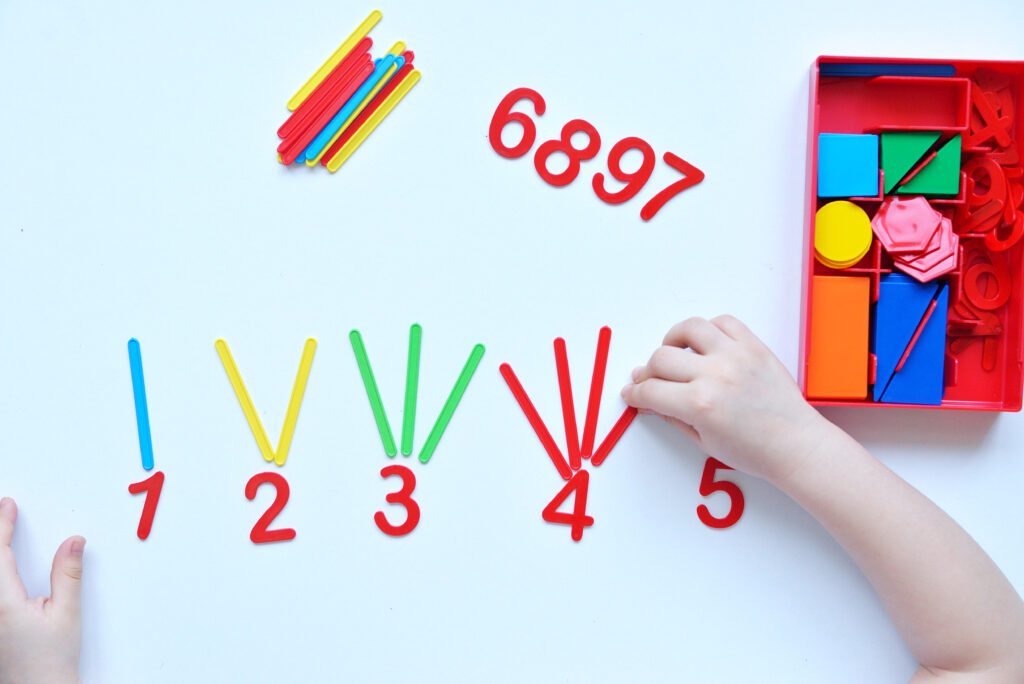
- Understand quantities (5 is more than 3, even without counting)
- See relationships between numbers (6 is one more than 5)
- Can compose and decompose numbers (7 = 5 + 2, or 4 + 3, or 6 + 1)
- Understand number patterns (counting by 2s, 5s, 10s)
- Use numbers flexibly to solve problems
- Estimate reasonably (about how many?)
Children without number sense:
- Can recite “1, 2, 3, 4, 5…” but don’t understand what it means
- Must recount from 1 every time
- Don’t see relationships between numbers
- Struggle when you change the question slightly
Example: Strong number sense: You: “Here are 5 blocks. If I add 2 more, how many?” Child: “7! Because 5 and 2 more is 7.”
Weak number sense: You: “Here are 5 blocks. If I add 2 more, how many?” Child: “Um… (counts) 1, 2, 3, 4, 5, 6, 7. Seven!”
Both got the answer, but the first child understood the relationship. The second child could only count.
Activities That Build Number Sense
- Subitizing (Recognizing Quantities Without Counting) Show a small group of objects briefly (2-5 items). “How many?” They shouldn’t count—they should just KNOW.
Use: dice, dot cards, finger patterns, quick flashes
- Ten Frames A 2×5 grid. Fill with counters. Children learn to see 10 as a benchmark and visualize numbers in relation to 10.
Example: 7 on a ten frame shows “3 more to make 10”
- Number Bonds (Part-Part-Whole) Understanding that 5 can be 3 + 2, or 4 + 1, or 5 + 0.
Use objects to show different ways to make numbers.
- Estimation Jars Fill a jar with objects. “About how many do you think?” Count to check. Builds sense of quantity.
- More/Less/Same Games Compare groups without counting. “Which pile has more?” Develop visual sense of quantity.
- Number Stories Tell stories with numbers. “3 birds were on a tree. 2 flew away. How many are left?” Solve with objects.
- Counting On (Not From 1 Every Time!) “You have 5. I give you 2 more. Start at 5 and count: 6, 7. So 5 + 2 = 7!”
This is more advanced than counting from 1 each time.
50+ Pre-K Math Activities (Hands-On & Engaging!)
These activities build Pre-K math skills through play, exploration, and real-life experiences. Most require minimal prep!
Counting & Number Recognition Activities
- Counting Collections Give child a basket of objects (20-30 items: beans, buttons, toys). “How many are there?” Let them count and organize.
- Number Hunt Find numbers in the environment: house numbers, license plates, signs, prices. Photograph or draw them.
- Dice Games Roll a die. Count the dots. Collect that many counters. Who gets to 20 first?
- Number Line Hop Create number line on floor with tape or chalk. Call out a number, child jumps to it.
- Number Puzzles Puzzles that match numerals to quantities (3 matches picture with 3 objects).
- Counting Books Read counting books: “Ten Black Dots,” “1, 2, 3 to the Zoo.” Count objects on each page.
- Number Playdough Roll playdough into “snakes.” Form numbers. Add the correct number of objects to each number.
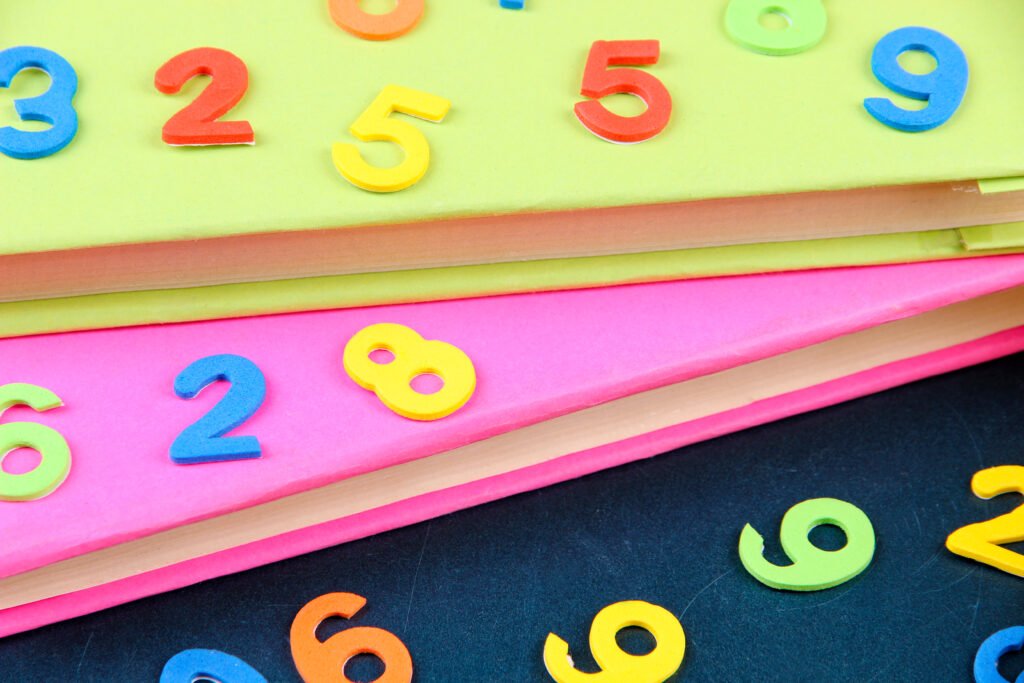
- Sticker Counting Give sticker sheets with numbers. Child puts correct number of stickers on each number.
- Number Parking Lot Write numbers on ground with chalk (parking spaces). Call out number, child drives toy car to park.
- Clothespin Number Match Write numbers on clothespins and bowls. Match correct number of clothespins to each bowl.
Operations Activities (Addition & Subtraction)
- Story Problems with Objects “You have 3 toy cars. I give you 2 more. How many now?” Solve with real objects.
- Number Bonds with Manipulatives “Show me 5 different ways to make 6!” (5 + 1, 4 + 2, 3 + 3, etc.) Use blocks or counters.
- Domino Addition Use dominoes. Count dots on each side. Add them together. “3 + 4 = 7”
- Adding Bears/Counters Use colored bears or counters. “Put 3 red and 2 blue in the bowl. How many total?”
- Subtraction with Objects “Start with 6 blocks. Take away 2. How many left?” Physical removal helps understanding.
- Dice Addition Roll two dice. Count dots on each. Add them. What’s the total?
- Number Line Addition Use a number line. Start at 5. Jump forward 3 spaces. Where did you land? (8!)
- Take-Away Games Start with 10 objects. Child closes eyes. Remove some. “I took away 3. How many are left?”
- Snap Cube Trains Build trains of snap cubes. “This train is 7 cubes. Break it into two parts. What did you make?” (4 + 3, 5 + 2, etc.)
- Food Math During snack: “You have 5 crackers. You eat 2. How many left?” Real-life problem solving!
Pattern Activities
- AB Pattern with Objects Create patterns with blocks, toys, or snacks. Red, blue, red, blue. “What comes next?”
- Pattern Bracelets String beads in patterns. Wear your pattern!
- Movement Patterns Create action patterns. Clap, stomp, clap, stomp. “What comes next?”
- Pattern Hunt Find patterns in environment: stripes on clothing, fence posts, tiles. Photograph them.
- Build-a-Pattern Game One person starts pattern. Next person continues it. Take turns extending.
- Sound Patterns Create patterns with instruments or body percussion. Clap, snap, clap, snap.
- Pattern Cards Use pattern cards. Child recreates pattern with objects, then extends it.
- Snack Patterns Make patterns with snacks: Cheerio, raisin, Cheerio, raisin. Then eat your pattern!
Shape & Spatial Activities
- Shape Hunt Find shapes in the room. “Find something that’s a circle. Find something that’s a square.”
- Shape Building Use pattern blocks or tangrams to create pictures and designs.
- Geoboard Shapes Use geoboards (peg boards with rubber bands) to create shapes.
- Play-Doh Shapes Roll playdough flat. Use cookie cutters to make shapes. Count sides and corners.
- Shape Sorting Sort objects by shape. All circles in one pile, all squares in another.
- Shape Collages Cut out shapes from magazines or colored paper. Create collages.
- 3D Shape Hunt Find 3D shapes: “Find something that’s a sphere (ball). Find a cylinder (can).”
- Shape Animals Create animals using shapes: “A bear has a circle head, oval body, circle ears…”
- Spatial Direction Games “Put the ball UNDER the table. Put it NEXT TO the chair. Put it BETWEEN the books.”
- Block Building with Directions “Build a tower. Put the blue block ON TOP. Put the red block BESIDE it.”
Measurement Activities
- Measuring with Non-Standard Units “How many blocks long is this book? How many paper clips long is your pencil?”
- Height Comparison Line up toys or family members. Who’s tallest? Shortest? Put them in order.
- Weight Comparison Use a balance scale (or just hold objects). “Which is heavier—the apple or the book?”
- Capacity Exploration Fill containers with water, rice, or sand. “Which holds more?”
- Cooking Measurement Measure ingredients while baking. “We need 2 cups of flour. Help me measure!”
- Length Comparison Compare objects: “Which stick is longer? Let’s line them up and see!”
- Footstep Measuring “How many footsteps from the door to the window? Let’s count together!”
Data & Graphing Activities
- Favorite Graph Survey family: “What’s your favorite fruit?” Create picture graph with results.
- Weather Graphing Track weather daily for a week or month. Create bar graph showing sunny, rainy, cloudy days.
- Snack Sort & Graph Sort snacks (Goldfish, pretzels, crackers). Count each type. Create graph.
- Color Graph Sort blocks or toys by color. Stack them to create bar graph. “Which color has the most?”
- Birthday Month Graph Create class or family graph showing birth months. “Which month has the most birthdays?”
Real-Life Math Integration
- Setting the Table “We need 4 plates, 4 forks, 4 cups. Can you count them out?”
- Grocery Store Math “We need 6 apples. Can you count them as we put them in the bag?”
- Calendar Math Daily calendar: “Today is the 15th. Yesterday was the 14th. Tomorrow will be…?”
- Money Play Use play money. “This costs 5 pennies. Count them out.”
- Time Telling (Introduction) “The big hand is on 12 and the little hand is on 3. It’s 3 o’clock!”
Teaching Addition & Subtraction Conceptually (Not Memorization!)
Pre-K children should understand WHAT addition and subtraction mean—not memorize facts.
The Right Approach to Operations
Start with Concrete Objects (Always!) Children need to physically manipulate objects to understand operations.
Wrong: Worksheets with “3 + 2 = ___” Right: “Here are 3 blocks. Here are 2 blocks. Put them together. Now how many?”
Use Story Problems Make math meaningful with stories: “3 birds were on a tree. 2 more flew over. How many birds now?” “You had 5 cookies. You ate 2. How many left?”
Model Thinking Aloud “Hmm, I have 4 crayons and you have 3 crayons. How many do we have altogether? Let’s see… 4, 5, 6, 7. We have 7!”
Use Multiple Representations
- Objects (blocks, toys, food)
- Fingers
- Drawings
- Number lines
- Ten frames
Focus on Strategies, Not Speed It’s okay (and good!) if children count on fingers, use objects, or draw pictures. These are legitimate strategies!
Progression of Addition Understanding
Stage 1: Counting All (Beginning) “3 + 2 = ?” Child counts: “1, 2, 3 (first group), 1, 2 (second group), then counts all: 1, 2, 3, 4, 5. Five!”
Stage 2: Counting On (More Advanced) “3 + 2 = ?” Child: “3… (then counts on) 4, 5. Five!” This is more efficient than counting all!
Stage 3: Known Facts (Emerging) “3 + 2 = ?” Child: “Five! I just know it.”
Most Pre-K children are in Stage 1-2. Stage 3 emerges in kindergarten/1st grade.
When to Introduce Symbols (+ – =)
Not too early! Children need concrete understanding FIRST.
Timeline:
- Beginning of Pre-K: No symbols. Just story problems with objects.
- Middle of Pre-K: Introduce + and – symbols with concrete problems.
- End of Pre-K: Beginning to recognize and use symbols with support.
How to introduce: “When we put groups together, we use this symbol: + (plus). It means add or combine.” “When we take away, we use this symbol: – (minus). It means subtract or remove.” “This symbol = (equals) means ‘is the same as’ or ‘makes.'”
Always pair symbols with concrete experiences!
Get Free Learning Activities!
Join thousands of parents and teachers who receive our best activities, tips, and printables every week. Plus, get instant access to our exclusive resource library!
No spam, ever. Unsubscribe anytime.
When and How to Use Math Worksheets
Worksheets have a place—but they’re not the primary teaching tool for Pre-K.
The Right Way to Use Worksheets
Worksheets are for PRACTICE, not TEACHING.
Wrong approach: Hand child worksheet: “Circle the group with more.” Hope they figure it out.
Right approach:
- Teach concept hands-on with objects
- Practice concept in multiple ways (games, activities)
- Use worksheet to reinforce understanding
- Keep it SHORT (5-10 minutes max)
When to introduce worksheets:
- Mid-Pre-K year (not beginning!)
- Only after concept is understood concretely
- As ONE tool among many (not the only tool)
Types of worksheets appropriate for Pre-K: ✅ Counting and number recognition
✅ More/less comparison
✅ Pattern completion
✅ Shape identification
✅ Simple addition/subtraction with pictures
✅ Number writing practice
Types to AVOID: ❌ Timed drills
❌ Abstract computation without pictures
❌ Long worksheets (more than 1-2 pages)
❌ Worksheets as punishment or busy work
Keep it fun and meaningful! If child resists worksheets, back off and stick with hands-on learning.
Integrating Math into Daily Life (The Best Teaching!)
Math is everywhere. The best math learning happens naturally throughout the day.
Morning Routine Math:
- Count stairs as you walk up/down
- “You need 2 socks. Can you get 2 socks?”
- “Which shoe is bigger—yours or mine?”
Meal Time Math:
- Set the table: “We need 4 plates. Count them!”
- Serve food: “You get 6 grapes. Count them as I put them on your plate.”
- Compare: “Who has more milk—you or your brother?”
Cooking & Baking Math:
- Measure ingredients
- Count items: “We need 12 muffins. Let’s count the cups.”
- Time: “The cookies bake for 10 minutes. Let’s set the timer.”
- Fractions: “Let’s cut this sandwich in half. Now you have 2 pieces!”
Outdoor Math:
- Count while jumping: “How many times can you jump?”
- Measure: “How many steps from here to the tree?”
- Patterns in nature: Look for patterns in leaves, petals, pinecones
Car Ride Math:
- Count objects: “How many red cars do you see?”
- License plate numbers: “That plate has a 7!”
- Estimate: “How many minutes until we get home?”
Bedtime Math:
- Count books: “How many books should we read? 2 or 3?”
- Time: “It’s 7:30. Bedtime is 8:00. How many more minutes?”
Store Math:
- Count money: “We need 3 dollars. Count out 3.”
- Find prices: “Which costs more?”
- Quantities: “We need 6 apples. Help me count.”
The secret: Narrate math throughout the day. Point out numbers, quantities, patterns, comparisons. Make math language part of your everyday vocabulary!
Common Pre-K Math Challenges & Solutions
Challenge: “My child can count to 100 but can’t count 10 objects accurately.”
Solution: This is very common! Rote counting (memorizing the sequence) is easier than one-to-one correspondence.
- Practice counting real objects daily
- Start small (5 objects), build up gradually
- Touch or move each object as you count
- Check understanding: “How many?” after counting
Challenge: “They mix up teen numbers (13, 14, 15).”
Solution: Teen numbers are HARD! The word “thirteen” doesn’t sound like “three-ten” (which is what it is).
- Use ten frames to visualize (10 + 3 more = 13)
- Practice with manipulatives
- Don’t stress—this solidifies in kindergarten
Challenge: “My child counts on fingers—is that bad?”
Solution: No! Finger counting is a legitimate strategy and actually shows good number sense. Most children outgrow it naturally. Don’t discourage—it’s a stepping stone to mental math.
Challenge: “They understand addition but subtraction confuses them.”
Solution: Subtraction is harder because it’s less intuitive. Focus on:
- Concrete “take away” problems with objects
- Start small (5 – 2, 4 – 1)
- Use real-life situations: “You had 5 crackers, you ate 2…”
- Be patient—this clicks with time and practice
Challenge: “Other kids are doing harder math—should I push ahead?”
Solution: No! Math understanding builds in layers. Rushing ahead without solid foundation creates gaps. Focus on DEEP understanding of current concepts, not racing ahead.
Frequently Asked Questions About Pre-K Math
Should my 4-5 year old be doing addition and subtraction? Yes—with objects! They should understand the CONCEPTS (putting together, taking away) and solve simple problems with manipulatives. But memorizing math facts isn’t expected until 1st-2nd grade.
How high should my child count before kindergarten? Most kindergarten-ready children can count to 20-30 aloud and count 20 objects accurately. Some count to 100+, others are still working on 20. Both are normal! Accurate counting (one-to-one correspondence) matters more than how high they can recite numbers.
My child still uses fingers for simple math. Is that wrong? Not at all! Finger counting is a legitimate math strategy and shows number sense. Most children naturally transition to mental math in 1st-2nd grade. Don’t discourage fingers—it’s a useful tool!
What if my child struggles with number reversals (writing 2, 5, 7 backwards)? Completely normal at ages 4-5! Number reversals are typical until ages 7-8. Gently model correct formation but don’t over-correct or create anxiety.
Should I use flashcards to teach math facts? Not for Pre-K! Flashcards encourage memorization without understanding. Focus on hands-on activities, games, and real-life math. Conceptual understanding first, facts later (1st-2nd grade).
My child can do mental math—should I give them harder problems? If they’re genuinely ready and ENJOYING it, yes! Follow their lead. But don’t push. Some children are early math learners; that’s great. But not necessary for kindergarten readiness.
What’s the most important math skill for kindergarten? Number sense! Understanding quantities, relationships between numbers, and flexible thinking with numbers. A child with strong number sense will succeed in kindergarten math, even if they can’t recite numbers to 100 or do flashcard facts.
Conclusion: You’re Building Mathematical Thinkers
Every time you count stairs, compare quantities, make patterns, or solve problems together, you’re building mathematical thinking that will serve your child for life.
Remember:
- Hands-on learning beats worksheets every time
- Number sense matters more than rote memorization
- Math is everywhere—integrate it into daily life
- Understanding concepts beats speed and facts
- Use objects, then pictures, then symbols
- Make it playful, not stressful
- Every child’s math journey is unique
Your Pre-K learner is developing powerful mathematical thinking—not just memorizing numbers. What a gift!
Continue your Pre-K math journey:
- Pre-K Kindergarten Animal Alphabet Workbook – Habitats Tracing Handwriting Dot Marker
- My Busy Book – Cut Match Activities for Preschool and Kindergarten
- Preschool Skills Assessment – Pre-K Portfolio Kindergarten Readiness
- Ultimate Homeschool Planner – Complete Learning Kit
Want a complete Pre-K math curriculum with everything planned for you? Our Complete Pre-K Curriculum includes 36 weeks of systematic math instruction—counting, number sense, operations, patterns, shapes, measurement, and problem-solving—all organized month-by-month with printables, hands-on activities, and no-prep lessons. Build confident mathematical thinkers without worksheets or stress!