Description
Target Audience: Homeschool moms + Preschool teachers + Parents
Primary Keyword: “pre-k science activities” (2,200 searches/mês)
Secondary Keywords: “nature activities preschool”, “simple science experiments 4 year olds”, “kindergarten science prep”, “stem activities pre-k”
Meta Description (160 caracteres): “Pre-K science & nature activities for ages 4-5. Simple experiments, nature exploration, STEM learning & hands-on discovery. No-prep ideas + printables!”
Your four-year-old is a natural scientist. They’re constantly asking “Why?” and “How?” They want to know why the sky is blue, how plants grow, what makes it rain, and where butterflies come from. Their curiosity is insatiable—and this is the perfect time to nurture that wonder.
Pre-K is when children transition from simple observation to genuine scientific thinking. They’re ready to make predictions, test ideas, compare results, and draw conclusions. They can understand cause and effect, recognize patterns, and begin to grasp basic scientific concepts that will serve them throughout their education.
But here’s what matters most: Science for 4-5 year olds isn’t about memorizing facts or conducting complex experiments. It’s about fostering curiosity, teaching observation skills, and showing children that they can discover answers through exploration.
Whether you’re a homeschool mom planning your Pre-K science curriculum, a preschool teacher creating engaging STEM activities, or a parent wanting to support your child’s natural curiosity, this guide gives you everything you need.
What you’ll discover:
- Why science matters for Pre-K development
- The scientific method for 4-5 year olds (simplified!)
- Essential science concepts for kindergarten readiness
- 50+ hands-on experiments and activities (no-prep & low-prep!)
- Nature exploration activities for every season
- STEM integration (science, technology, engineering, math)
- How to answer endless “why?” questions productively
- Free printable science journals and activities
Let’s raise curious, confident scientists who love discovering how the world works!
Why Science Matters for Pre-K Learning
Science education for 4-5 year olds accomplishes far more than teaching facts. It builds critical thinking skills that transfer to every area of learning.
What Science Teaches Beyond Content:

Scientific Thinking Skills
Observation: Noticing details, using all five senses, describing what they see accurately.
Questioning: Asking “why?” and “how?” and learning that questions lead to discovery.
Predicting: Making educated guesses based on prior knowledge. “What do you think will happen?”
Testing: Trying things out to see what happens. Understanding that we can find answers through experimentation.
Comparing: Noticing similarities and differences. “How is this the same? How is it different?”
Recording: Drawing or dictating observations. Building documentation skills.
Concluding: Drawing conclusions based on evidence. “What did we learn?”
These are the same thinking skills needed for reading comprehension, mathematical problem-solving, and all future learning!
Developmental Benefits of Science
Language Development:
- Rich vocabulary (hypothesis, observe, experiment, dissolve, evaporate)
- Descriptive language (rough, smooth, heavy, light, fast, slow)
- Question formation and answering
Math Integration:
- Counting, measuring, comparing quantities
- Patterns and sequences
- Data collection and graphing
- Spatial reasoning
Fine Motor Skills:
- Using tools (magnifying glass, eyedropper, tweezers)
- Drawing observations
- Manipulating materials
Social-Emotional Development:
- Patience (waiting to see what happens)
- Persistence (trying again when experiments “fail”)
- Collaboration (working together on projects)
- Curiosity and wonder (joy of discovery)
Executive Function:
- Following multi-step procedures
- Remembering and comparing past experiences
- Planning and problem-solving
Science is WHOLE CHILD education!
The Scientific Method for Pre-K (Simplified & Accessible)
The scientific method sounds fancy, but for Pre-K, it’s simple: Ask, Guess, Try, See, Tell.
The 5-Step Scientific Process for Ages 4-5
Step 1: Ask a Question “What do you wonder about? What are you curious about?”
Examples:
- “Will this sink or float?”
- “What will happen if we mix these colors?”
- “How does a seed become a plant?”
- “What melts faster—ice or ice cream?”
Step 2: Make a Prediction (Hypothesis) “What do you THINK will happen?”
This isn’t about being right—it’s about thinking and making educated guesses!
“I think the rock will sink because it’s heavy.” “I think the ice cream will melt faster because it’s softer.”
Step 3: Test It Out (Experiment) “Let’s try it and see!”
Actually DO the experiment. Observe carefully.
Step 4: Observe & Record (Results) “What happened? What do you see?”
Draw pictures, take photos, dictate observations.
Step 5: Share What You Learned (Conclusion) “What did we discover? Was your prediction right?”
Talk about what happened and why.
Important: There are no “wrong” predictions! Science is about discovering what ACTUALLY happens, not guessing correctly.
Example: Simple Scientific Method in Action
Question: “Will a potato float or sink?”
Prediction: Child: “I think it will sink because it’s heavy.” Parent/Teacher: “Interesting! Let’s test it!”
Experiment: Fill bowl with water. Place potato in water.
Observe: Child: “It sank! It went to the bottom!”
Conclusion: “We discovered that potatoes sink! Your prediction was correct—the potato was too heavy to float. What else could we test?”
Total time: 3 minutes. But the child just practiced the entire scientific method!
Essential Science Concepts for Pre-K
Pre-K science covers four main domains: Life Science, Physical Science, Earth & Space Science, and Engineering. Here’s what children should explore:
Life Science (Living Things)
What 4-5 Year Olds Should Understand:
Living vs. Non-Living:
- Living things grow, change, need food/water, reproduce
- Non-living things don’t grow or need food
- Sorting objects/pictures: living or non-living?
Basic Needs of Living Things:
- Plants need: water, sunlight, air, soil (nutrients)
- Animals need: food, water, air, shelter
- People need: food, water, air, shelter, clothing
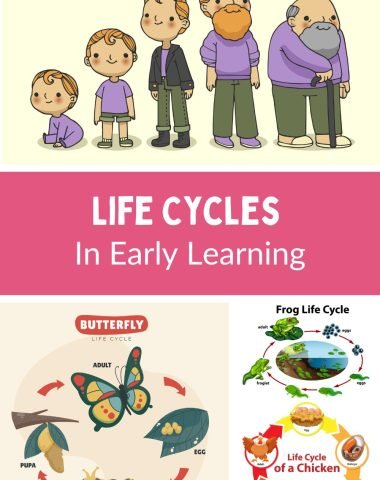
Life Cycles:
- Living things grow and change over time
- Plants: seed → sprout → plant → flower → seeds
- Animals: egg → baby → adult
- Humans: baby → child → teenager → adult → elder
Animals & Habitats:
- Different animals live in different places (habitats)
- Animals have adaptations that help them survive
- Basic animal groups: mammals, birds, fish, reptiles, insects
Plants:
- Parts of a plant: roots, stem, leaves, flower
- Plants grow from seeds
- Different types of plants (trees, flowers, vegetables)
Human Body Basics:
- Body parts and their functions
- Five senses: sight, hearing, taste, smell, touch
- Healthy habits: nutrition, exercise, sleep, hygiene
Physical Science (How Things Work)
What 4-5 Year Olds Should Explore:
Properties of Matter:
- Objects have properties: color, size, shape, texture, weight
- Materials can be: hard/soft, rough/smooth, heavy/light, wet/dry
- Sorting and classifying by properties
States of Matter:
- Solids keep their shape
- Liquids flow and take shape of container
- Gases are invisible but take up space (air!)
- Matter can change states (ice melts, water freezes)
Simple Machines & Forces:
- Push and pull make things move
- Ramps make things go down
- Wheels help things roll
- Levers help us lift heavy things
- Magnets attract some metals
Mixing & Changing:
- Some things mix together (water + juice)
- Some things don’t mix (water + oil)
- Some changes are reversible (freeze water, melt ice)
- Some changes are permanent (baking a cake, burning paper)
Sinking & Floating:
- Some objects sink, some float
- Heavy objects usually sink
- Objects with air inside often float
Earth & Space Science (Our World & Beyond)
What 4-5 Year Olds Should Learn:
Weather & Seasons:
- Types of weather: sunny, rainy, cloudy, windy, snowy
- Weather changes day to day
- Four seasons and their characteristics
- How weather affects what we wear and do
Earth Materials:
- Rocks, soil, sand, water
- Earth is made of different materials
- We use earth materials (build with rocks, grow in soil)
Day & Night:
- Sun shines during the day
- Moon and stars visible at night
- Day and night cycle every 24 hours
Water Cycle (Basic):
- Rain comes from clouds
- Water evaporates (goes into air)
- Water falls as rain/snow
- Water flows downhill (rivers, streams)
Caring for Earth:
- We need to take care of our planet
- Reduce, reuse, recycle
- Don’t litter
- Conserve water
Engineering & Technology (Building & Creating)
What 4-5 Year Olds Should Try:
Design Process:
- Identify a problem
- Plan a solution
- Build it
- Test it
- Make it better
Simple Building Challenges:
- Build a bridge that holds a toy car
- Create a tower as tall as possible
- Design a boat that floats
- Build a ramp for a ball
Tools & Technology:
- Using simple tools: hammer, screwdriver, measuring tape
- Understanding that technology helps us solve problems
- Observing machines and how they work
50+ Pre-K Science & Nature Activities (Hands-On Discovery!)
These activities are organized by science domain and difficulty. Most require minimal materials—many use items you already have at home!
Life Science Activities
Plants & Growing
- Seed Planting & Observation Plant fast-growing seeds (beans, sunflowers) in clear cups. Observe daily. Draw growth changes.
Why it’s great: Teaches plant life cycle, patience, responsibility, observation skills.
- Seed Dissection Soak large beans overnight. Open them carefully. Find the baby plant inside!
- Root Observation in Water Place sweet potato or avocado pit in water (toothpicks holding it up). Watch roots grow over days/weeks.
- Plant Needs Experiment Plant 3 identical seeds. Give one water + sunlight. Give one only water (no sun). Give one only sun (no water). Compare growth.
Teaches: Plants need BOTH water and sunlight.
- Leaf Collection & Comparison Collect different leaves. Sort by size, shape, color, texture. Make leaf rubbings.
- Flower Dissection Take apart a flower. Identify parts: petals, stem, leaves, center. Count petals.
Animals & Habitats
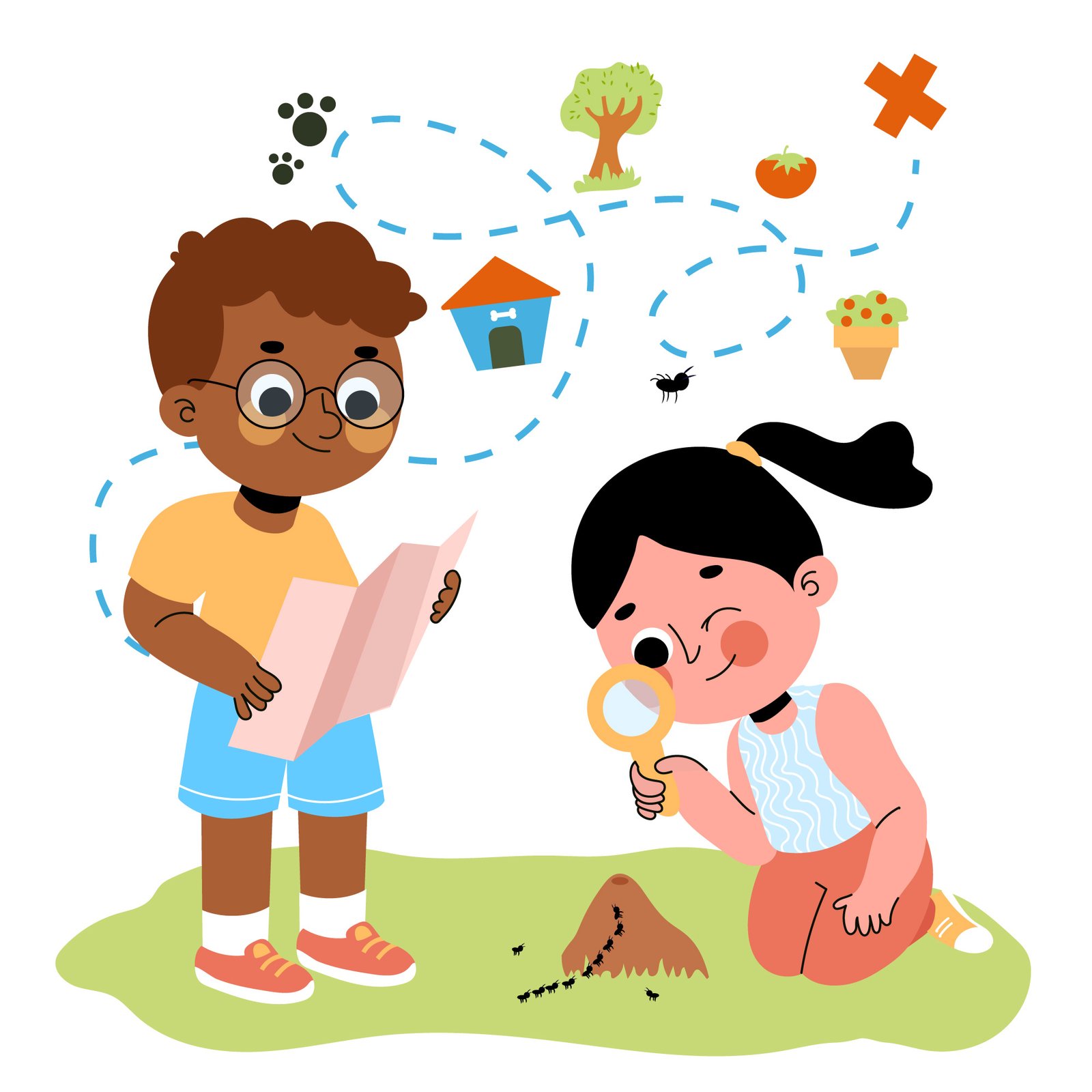
- Worm Observation Find worms after rain. Observe with magnifying glass. Notice how they move. Return to soil.
- Bird Watching Hang bird feeder. Observe birds that visit. Count them. Identify types (with guide or app).
- Insect Hunt Search for insects outside. Observe safely (don’t touch!). Draw what you see.
- Animal Sorting Game Sort animal pictures/toys by: where they live (land, water, air), how they move (walk, fly, swim), what they eat.
- Pet Care Study If you have pets, study their needs. What do they eat? How do they move? How do we care for them?
- Animal Tracks Press toy animals into playdough or clay. Observe the “tracks” they make. Match track to animal.
Human Body
- Five Senses Exploration Explore each sense deliberately:
- Sight: I Spy colors
- Hearing: Listen walk (eyes closed, identify sounds)
- Touch: Mystery bag (feel objects without seeing)
- Taste: Taste test (sweet, salty, sour, bitter)
- Smell: Smell jars (identify by scent)
- Heartbeat & Breathing Feel heartbeat at rest. Jump 20 times. Feel heartbeat again. Compare!
Teaches: Exercise makes heart beat faster.
- Shadow Play Use bodies to make shadows. Notice shadow changes with light position.
Physical Science Activities
Properties & States of Matter
- Sink or Float Predictions Collect objects. Predict: sink or float? Test in water. Record results.
- Ice Melting Experiments Place ice cubes in different conditions: sun, shade, warm water, cold water, salt water. Which melts fastest?
- Dissolving Experiment Test what dissolves in water: salt, sugar, sand, oil, pepper. Stir and observe.
- Color Mixing Mix primary colors (red, yellow, blue) to make secondary colors (orange, green, purple). Use paint, colored water, or food coloring.
- Oobleck (Solid or Liquid?) Mix cornstarch + water (2:1 ratio). Is it solid or liquid? It acts like both!
Teaches: Some materials have surprising properties.
- States of Matter Exploration
- Solid: Hold ice cube. Feel it, describe it.
- Liquid: Pour water. Watch it flow.
- Gas: Feel air from fan. Blow bubbles.
- Texture Sorting Collect materials. Sort by texture: rough/smooth, hard/soft, bumpy/flat.
Forces & Motion
- Ramp Races Create ramp with board or cardboard. Roll different objects down. Which goes fastest? Why?
Variables to test: Ramp steepness, object weight, object shape.
- Magnet Exploration Test objects: attracted to magnet or not? Sort into two groups.
- Push & Pull Move objects by pushing, pulling. Compare which is easier for different objects.
- Pendulum Swinging Hang object on string. Swing it. Change length of string. Does it swing faster or slower?
- Balance & Weight Use simple balance scale. Compare weights of objects. Which is heavier?
Mixing & Changing
- Baking Soda & Vinegar Reaction Classic! Mix and watch it fizz. Add food coloring for extra excitement.
Teaches: Some mixtures create chemical reactions.
- Oil & Water Pour oil and water in clear jar. Do they mix? Add food coloring. What happens?
- Freezing & Melting Freeze water with small toys inside. Then “rescue” toys by melting ice (in bowl of warm water, in sun, with salt).
- Evaporation Observation Draw line on water level in clear cup. Leave for several days. What happens to water level?
Teaches: Water evaporates into air.
- Bubble Science Make bubble solution. Blow bubbles. Observe: shape, colors, how they pop. Experiment with different bubble wands.
Earth & Space Science Activities
Weather & Seasons
- Daily Weather Journal Each day: observe weather, draw picture, record temperature (if you have thermometer). Look for patterns over weeks.
- Rain Gauge Make simple rain gauge (clear container with marks). Measure rainfall. Graph over time.
- Cloud Watching Observe clouds. What shapes do you see? Types: fluffy (cumulus), flat (stratus), wispy (cirrus).
- Wind Experiment Make simple wind sock or pinwheel. Observe how wind moves it. Does wind blow same direction all day?
- Seasonal Nature Walk Take same walk each season. Photograph or draw what you see. How does nature change?
- Temperature Exploration Feel different temperatures: ice water, warm water, hot water (safe temp!), room temp water. Describe differences.
Earth Materials
- Rock Collection & Sorting Collect rocks. Observe with magnifying glass. Sort by size, color, texture, weight.
- Soil Exploration Dig in different types of soil. Compare: sandy soil, clay soil, potting soil. Which holds water best?
- Sand vs. Soil Compare properties. Which is rougher? Which holds shape? Plant seed in each—which grows better?
- Water Absorption Test materials: which absorb water (sponge, paper towel, fabric)? Which don’t (plastic, foil)?
Day, Night & Space
- Day & Night Sky Draw daytime sky (sun, clouds, blue). Draw nighttime sky (moon, stars, dark). Discuss differences.
- Shadow Tracking Mark shadow location at different times of day (morning, noon, afternoon). Why does it move?
Teaches: Sun moves across sky, shadows change.
- Moon Observation Observe moon for a week. Draw what you see each night. Does it look the same?
Engineering & Building Activities
- Bridge Building Challenge Use blocks, cardboard, or popsicle sticks. Build bridge that holds toy car. Test it!
- Tallest Tower Build tallest tower possible. Test materials: blocks, cups, cardboard. Which works best?
- Boat Design Use foil, plastic containers, corks. Design boat that floats. Can it hold pennies without sinking?
- Ramp for Toy Car Build ramp for toy car. Make it go fast! Adjust angle. Test different surfaces.
- Paper Airplane Engineering Fold different airplane designs. Test which flies farthest. Modify design and test again.
Design Process in Action!
Nature Exploration Activities (Outdoor Science)
- Nature Scavenger Hunt List: something rough, something smooth, something living, something red, etc. Find in nature!
- Bark Rubbings Place paper on tree bark. Rub with crayon. Compare different tree barks.
- Bug Hotel Create habitat for insects using sticks, leaves, pinecones in container. Observe who moves in!
- Nature Journaling Draw what you observe in nature: plants, animals, weather, changes over time.
- Outdoor Sound Map Sit quietly outside. Draw simple map. Mark where sounds come from (birds, wind, cars, etc.).
Get Free Learning Activities!
Join thousands of parents and teachers who receive our best activities, tips, and printables every week. Plus, get instant access to our exclusive resource library!
No spam, ever. Unsubscribe anytime.
Integrating Science Throughout Your Pre-K Year
Science shouldn’t be isolated “science time.” It should be woven into daily life and connected to other subjects.
Monthly Science & Nature Themes
September: All About Me & My Body
- Five senses exploration
- Body parts and functions
- Healthy habits (nutrition, exercise, hygiene)
- Growth and change (baby to child)
October: Fall & Harvest
- Seasonal changes (leaves, weather)
- Pumpkin life cycle
- Apple exploration
- Fall nature walks
November: Animals & Habitats
- Where animals live
- Animal adaptations
- Preparing for winter (hibernation, migration)
- Animal sorting and classification
December: Winter & Weather
- Winter weather observation
- States of matter (ice, snow)
- How we stay warm
- Winter animals
January: Push, Pull & Forces
- Simple machines
- Ramps and motion
- Magnets
- Cause and effect
February: Love & Senses
- Five senses deep dive
- Heartbeat and circulation (simple)
- Healthy body, healthy heart
- Texture and touch exploration
March: Spring & Plant Life
- Seed planting
- Plant life cycle
- Plant needs (water, sun, soil)
- Spring nature changes
April: Earth & Recycling
- Caring for our planet
- Reduce, reuse, recycle
- Earth materials (rocks, soil, water)
- Nature conservation
May: Insects & Small Creatures
- Insect observation
- Butterfly or caterpillar raising
- Life cycles
- Habitats (ponds, gardens)
June: Water & Weather (Summer)
- Water cycle
- States of matter (liquid, solid, gas)
- Summer weather
- Ocean exploration (if relevant)
Connecting Science to Other Subjects
Science + Literacy:
- Read non-fiction books about science topics
- Write/draw in science journals
- Learn science vocabulary
- Follow procedural text (experiment steps)
Science + Math:
- Count objects in nature
- Measure (plant growth, rainfall, temperature)
- Graph data (weather, observations)
- Compare quantities (which holds more? which is heavier?)
Science + Art:
- Nature art (leaf prints, flower pressing)
- Illustrate observations
- Create models (life cycles, habitats)
- Mix colors scientifically
Science + Social Studies:
- How people use earth resources
- How weather affects communities
- Caring for our environment
- Different habitats around the world
Answering “Why?” Questions Productively
Pre-K children ask endless “why?” questions. Instead of just giving answers, use questions as teaching opportunities!
The 3-Step Response to “Why?”
Step 1: Validate the Question “That’s a great question! You’re thinking like a scientist!”
Step 2: Ask What They Think “What do YOU think? Why do you think that happens?”
This encourages them to hypothesize and think critically.
Step 3: Explore Together “Let’s find out together! How could we discover the answer?”
Options:
- Do an experiment
- Observe and see
- Look in a book
- Search online together
- Ask an expert
Example Conversations
Child: “Why do leaves fall off trees?”
Wrong Response: “Because it’s fall.” (Shuts down curiosity)
Better Response: “Great question! What do YOU think?” [Child shares idea] “Let’s observe the trees on our walk. Maybe we’ll notice clues! And we can look in our tree book to learn more.”
Child: “Why is the sky blue?”
Response: “You’re noticing colors in nature! That’s a tricky question. What color do you think the sky should be?” [Discuss] “Let’s look this up together in our science book!” [Or, simple answer: “The air and sunlight mix together in a special way that makes it look blue!”]
Child: “Why does ice melt?”
Response: “Interesting! What do you think makes ice melt?” [Child shares] “Let’s test it! We’ll put ice in different places and see what happens. Where should we put ice to make it melt fast? Where should we put it to make it melt slow?” [Experiment time!]
The goal: Keep curiosity alive. Encourage thinking. Show that questions lead to discovery.
Creating a Science-Rich Environment
You don’t need a fancy science lab! A science-rich environment just means making observation, exploration, and discovery part of everyday life.
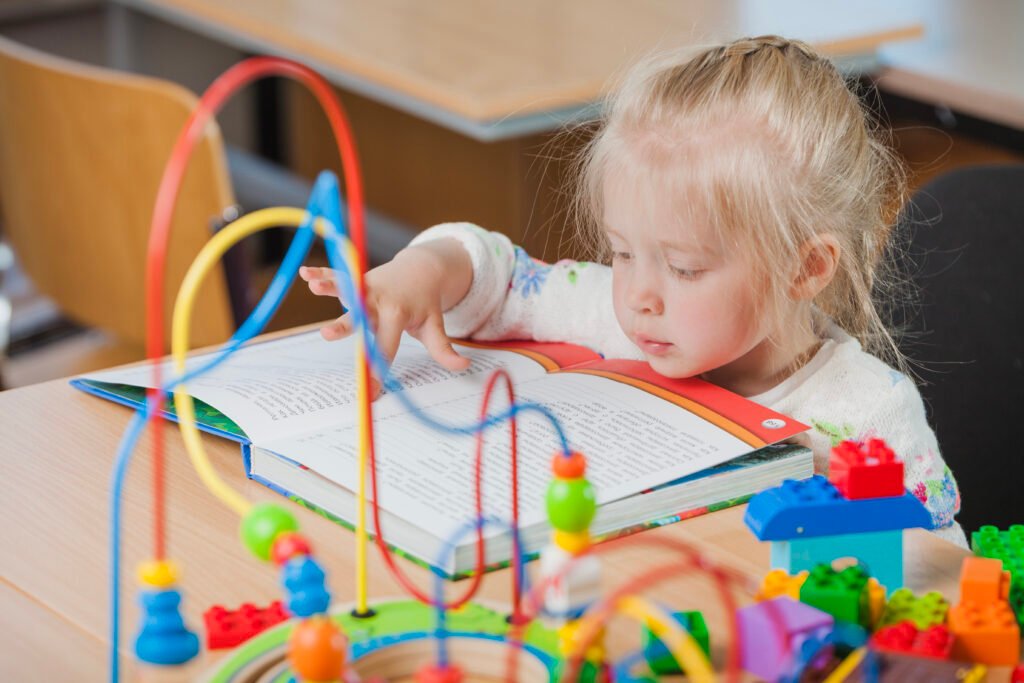
Science Materials to Have Available
Basic Science Tools:
- Magnifying glass (1-2)
- Plastic tweezers/tongs
- Measuring cups and spoons
- Eyedroppers
- Clear containers (various sizes)
- Funnels
- Flashlight
- Thermometer (simple, easy-to-read)
Natural Materials for Exploration:
- Rocks, shells, pinecones
- Leaves, sticks, seeds
- Feathers
- Soil, sand
Household Materials for Experiments:
- Baking soda, vinegar
- Food coloring
- Cornstarch
- Salt, sugar
- Oil, water
- Ice cube trays
- Paper towels, coffee filters
Documentation Tools:
- Science journal (notebook for drawing/dictating)
- Camera or tablet for photos
- Clipboard for outdoor observations
- Crayons for nature rubbings
Setting Up Science Areas
Indoor Science Center:
- Small table or shelf
- Magnifying glasses, tools
- Collections to observe (rotate weekly)
- Books about current science topic
- Science journal
Outdoor Exploration Kit:
- Backpack or basket with:
- Magnifying glass
- Collection containers
- Binoculars (optional)
- Field guide (simple, picture-based)
- Notebook and pencil
Sensory Exploration:
- Sensory bins (rotate contents)
- Water table or large tub
- Sand/soil play area
Common Pre-K Science Questions (And How to Answer)
“Do I need to know all the scientific answers?”
No! It’s okay to say “I don’t know—let’s find out together!” Model being a learner. Look things up in books or online together. The process of discovering is more valuable than having instant answers.
“What if experiments don’t work?”
Perfect! That’s real science. Discuss: “What happened? Why do you think it didn’t work? What could we try differently?” Failed experiments teach persistence and problem-solving.
“My child isn’t interested in science activities. What should I do?”
Follow their interests! If they love dinosaurs, do dinosaur science. If they love cooking, do kitchen science. Make it relevant to what they already care about. Also: keep it short, hands-on, and playful.
“How much science should Pre-K do?”
Formal “science time”: 15-20 minutes, 2-3 times per week. But science thinking should happen daily through observation, questions, and exploration integrated into play and daily routines.
“Should I teach science vocabulary?”
Yes, but naturally! Use proper terms (evaporate, dissolve, habitat, life cycle) in context. Define them simply. Kids love “big words” and they build language skills. But don’t quiz or drill—just use the words meaningfully.
“What if I don’t have materials for an experiment?”
Most science happens with everyday materials: water, ice, food coloring, household objects. You don’t need special equipment. Observation of nature is free! Improvise and adapt activities to what you have.
Frequently Asked Questions About Pre-K Science
Is science important for Pre-K or should I focus on literacy and math?
Science integrates literacy (reading non-fiction, learning vocabulary), math (measuring, counting, graphing), and critical thinking. It’s not “extra”—it’s essential for developing curious, thoughtful learners. Plus, science activities naturally build attention span, following directions, and patience.
Can 4-5 year olds really understand scientific concepts?
Yes! They won’t understand at a high school level, but they can grasp basic concepts: living things need food and water, ice melts when warm, plants grow from seeds. Keep explanations simple and concrete. Hands-on experience builds understanding.
How do I teach science if I didn’t like science in school?
Pre-K science is about exploration and wonder—not memorizing facts or doing complex experiments. You don’t need a science background. Follow your child’s curiosity. Observe together. Ask questions together. Look up answers together. Your enthusiasm for learning matters more than your knowledge.
Should we memorize science facts (planets, animal names, etc.)?
For Pre-K? No. Focus on process over facts. Teach observation, questioning, predicting, testing. The facts will come naturally through exploration and discussion. A child who loves science and knows how to find answers will learn facts easily later.
My child wants to touch everything in nature—is that okay?
Touching is learning! Let them touch (safely): bark, leaves, rocks, soil. Teach exceptions: don’t touch insects (observe only), plants with thorns, mushrooms (some poisonous). Wash hands after outdoor exploration. Tactile learning is powerful!
What about screen-based science (videos, apps)?
Short, high-quality science videos can supplement hands-on learning. But screens should never replace actual experiments and nature exploration. Real-world, multi-sensory experiences build deeper understanding. Use screens to enhance, not replace, hands-on science.
Conclusion: You’re Raising Curious Scientists
Every time your child asks “why?”, makes a prediction, observes nature, or tries an experiment, they’re thinking like a scientist. You’re not just teaching science facts—you’re nurturing curiosity, wonder, and the confidence to explore the world.
These skills—observation, questioning, predicting, testing, concluding—are the foundation of scientific thinking that will serve them in every subject and throughout life.
Remember:
- Curiosity matters more than correct answers
- Hands-on exploration beats memorization
- “Failed” experiments teach valuable lessons
- Nature is your best science classroom (and it’s free!)
- Follow your child’s interests and questions
- Process over facts
- Wonder over worksheets
Your Pre-K scientist is discovering the world—and that sense of wonder and curiosity is the greatest gift you can nurture.
Continue your Pre-K journey:
- Pre-K Kindergarten Animal Alphabet Workbook – Habitats Tracing Handwriting Dot Marker
- My Busy Book – Cut Match Activities for Preschool and Kindergarten
- Preschool Skills Assessment – Pre-K Portfolio Kindergarten Readiness
- Ultimate Homeschool Planner – Complete Learning Kit
Want science integrated into every week of your Pre-K year? Our Complete Pre-K Curriculum includes monthly science themes, weekly hands-on experiments, nature exploration activities, observation journals, and STEM challenges—all aligned with your academic learning. No guessing what to teach or when. Build curious, confident scientists who are ready for kindergarten and excited about learning!